Things to Do in Tirana: The Insider’s Guide to Albania’s Most Surprising Capital
Pull up a plastic chair at a bujtinë café on Blloku’s pedestrian strip on a Tuesday afternoon and watch what happens. Office workers spill out of Ministry buildings, university students argue philosophy over macchiatos, and elderly men play dominoes under mulberry trees — all within walking distance of the same boulevard that, three decades ago, only Communist Party elites were permitted to enter. That contrast — between a sealed, grey past and a chaotic, colourful present — is exactly what makes things to do in Tirana so endlessly rewarding to explore. The city doesn’t hide its contradictions. It paints them in neon yellow and hot pink directly onto the concrete.
Why Tirana Deserves More Than a Stopover
Most visitors pencil Tirana in as a one-night transit point before heading to Berat or the Albanian Riviera. That’s a mistake we hear about constantly from travellers who come back to us saying they wish they’d stayed longer. The capital has transformed at a remarkable pace since the early 2000s, when Mayor Edi Rama — yes, the painter who became Prime Minister — launched his famous urban colour project and turned crumbling grey tower blocks into abstract murals. Today, the city hosts a serious contemporary art scene, a craft coffee culture that rivals Sarajevo’s, and a food landscape that draws on Ottoman, Italian, and communist-era Albanian traditions in ways that are genuinely unique.
Tirana sits in a wide valley ringed by the Dajti Mountain massif to the east and lower hills to the west, which means the skyline has real drama to it. On clear winter mornings you can see snow on Dajti from Skanderbeg Square. That geographical setting shapes the city’s rhythm — locals hike on weekends, the outdoor dining season runs almost year-round, and the city breathes differently from enclosed, coastal capitals.
wp:image {“id”:162}
/wp:image
Skanderbeg Square and the Historic Core
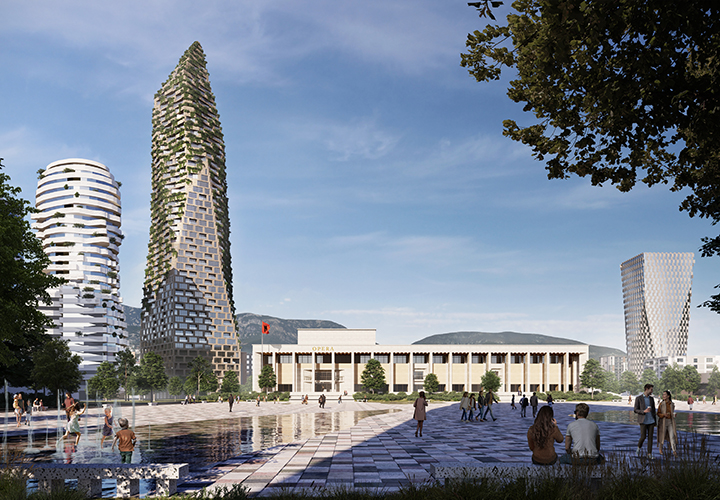
Start where every visitor starts: Skanderbeg Square. But don’t treat it as a photo stop and move on. The square was completely redesigned and reopened in 2017, and its pedestrian layout now makes it the genuine civic heart of the city. The equestrian statue of Gjergj Kastrioti — the 15th-century Albanian nobleman known as Skanderbeg who united Albanian lords against Ottoman expansion — anchors the centre. Facing it is the Et’hem Bey Mosque, one of the most exquisite small mosques in the Balkans, with interior frescoes depicting trees, waterfalls, and bridges rather than the geometric patterns you’d typically expect under Islamic art conventions. It was built between 1791 and 1821, survived communist-era atheism, and reopened to worshippers in 1991 during a moment of mass religious freedom that tens of thousands of Albanians flooded the square to witness.
Right beside the mosque sits the Clock Tower, built in 1822. Climb it for free on weekday mornings for a rooftop view that puts the square’s proportions into perspective. To the west of the square, the National History Museum fronted by its enormous socialist-realist mosaic is impossible to miss. The mosaic alone — depicting Albanian figures across history from Illyrian warriors to communist partisans — is worth studying for fifteen minutes before you even enter the building.
The Blloku District: Where the City Actually Lives
No list of things to do in Tirana is complete without spending serious time in Blloku. This neighbourhood, roughly bounded by Rruga Ismail Qemali and Rruga Pjetër Bogdani, was literally off-limits to ordinary Albanians until 1991 — it housed the villas of Enver Hoxha and the Communist Party leadership. Today it’s the city’s social engine: rooftop bars, independent bookshops, vinyl record stores, tattoo studios, and some of the best restaurants in the country all compete for space on its leafy, low-rise streets.
For coffee specifically, try Mulliri i Vjetër for traditional Albanian coffee culture, or head to one of the third-wave espresso spots that have opened since 2022. Tirana’s café scene operates on its own logic — you are expected to sit for hours, and nobody will rush you. This is not performative hospitality. It’s a deeply ingrained social custom that makes the city genuinely relaxing to inhabit.
In the evenings, Blloku’s bar strip on Rruga Pjetër Bogdani fills up from around 8pm. Albanians eat late and socialise later. Dinner at 9pm is normal. The energy doesn’t peak until well after midnight on weekends, and the music policy at most bars mixes Balkan pop, Italian dance music, and Albanian folk songs in a combination you won’t hear anywhere else on the continent.
Museums, Bunkers, and Layers of History
The Bunk’Art installations are among the most compelling museum experiences we’ve encountered anywhere in Europe, full stop. There are two of them. Bunk’Art 1 occupies a massive Cold War nuclear bunker built into the base of Dajti Mountain on the city’s northeastern edge — it has over 100 rooms and was designed to shelter the Communist leadership in the event of a nuclear attack. The tunnels are now filled with immersive exhibitions about Hoxha’s paranoid security apparatus, the brutal Sigurimi secret police, and the daily reality of life under one of Europe’s most isolated dictatorships. It takes at least two hours to do it justice.
Bunk’Art 2 is smaller and more focused, located beneath the Ministry of Internal Affairs in the city centre. Its exhibitions deal specifically with the Sigurimi’s crimes — surveillance, imprisonment, torture, and political executions. It’s heavy material, presented with restraint and considerable archival depth. Both installations are essential context for understanding why modern Albania looks and behaves the way it does.
For a different kind of historical layering, the National Archaeological Museum houses artefacts from Albania’s Illyrian, Greek, Roman, Byzantine, and medieval periods — a timeline that reminds you this territory has been continuously inhabited and fought over for well over three thousand years. The collection is less polished than Western European national museums, but that gives it a kind of raw authenticity that curated displays sometimes lose.
Dajti Mountain: The City’s Natural Escape
Take the Dajti Ekspres cable car from the eastern edge of the city and you’ll ascend 1,613 metres in under 15 minutes. The views over Tirana’s valley on the way up are worth the ticket price alone. At the summit, the Dajti National Park offers walking trails through beech and oak forests, a restaurant with a terrace that fills with families on weekends, and in winter, a small snow play area that Tirana families treat as their local ski hill.
The mountain hike options are genuinely varied — from short 45-minute forest loops accessible to anyone in reasonable fitness, to longer ridge walks that take the better part of a day and offer views across to the Adriatic coast on exceptionally clear days. If you’ve already been reading about Albania’s serious mountain hiking — and if you haven’t, our Valbona to Theth hike guide covers the country’s most dramatic long-distance trail — Dajti gives you a taste of Albanian highland terrain without requiring a multi-day commitment.
Markets, Food, and Eating Like a Local
The Pazari i Ri — the New Bazaar — is a revitalised Ottoman-era market that reopened in its current form in 2017. The covered market hall sells fresh produce, artisan cheeses, dried figs, home-distilled raki, and handmade crafts. The surrounding streets have filled with restaurants, wine bars, and street food stalls that make it one of the best places in the city to eat well without spending much. A full byrek breakfast — the flaky, oil-rich pastry filled with spinach or cheese that’s Albania’s unofficial national food — costs less than €2 at the market bakeries. A grilled lamb chop dinner at one of the sit-down restaurants nearby runs €8–12.
Albanian food deserves more attention than it usually gets from food writers. The cuisine sits at a crossroads: Ottoman influences in the slow-cooked meat dishes and stuffed vegetables, Italian pasta and pizza from decades of proximity and emigration, and a distinct mountain tradition of fermented dairy, wild herbs, and wood-fired bread. Tave kosi — baked lamb with yoghurt and eggs — is the dish most associated with Tirana specifically. Order it wherever you see it on the menu.
Day Trips That Amplify the Tirana Experience
Tirana’s central location means several major sites sit within two hours by road. Krujë — the hilltop castle town where Skanderbeg made his military stand against the Ottomans — is just 32 kilometres north. The castle, the national museum inside it, and the winding Ottoman bazaar street selling hand-painted icons, copper bowls, and kilims make it a half-day trip that adds enormous historical depth to what you’ve already absorbed in the capital.
Berat, the UNESCO-listed “city of a thousand windows,” is 120 kilometres south. It’s a full day from Tirana but absolutely worth organising as an overnight stay. The white Ottoman houses stacked up the hillside below the castle, the Byzantine churches inside the fortress walls, and the extraordinary quiet of the place after day-trippers leave — Berat operates at a completely different frequency from Tirana, and the contrast sharpens your understanding of both places.
Understanding when to make these trips matters as much as knowing where to go. Our month-by-month guide to visiting the Balkans breaks down seasonal conditions across the region, including the best windows for combining Tirana with coastal and mountain destinations without hitting summer crowds or shoulder-season closures.
Practical Information for Getting Around Tirana
Tirana is walkable in its centre but sprawling in its outer districts. The historic core — from Skanderbeg Square down through Blloku to the river — can be covered entirely on foot. For Bunk’Art 1 and the cable car, you’ll need a taxi or the city bus network. Ride-hailing apps including Bolt operate widely and are significantly cheaper than hailing taxis from the street; a cross-city trip rarely exceeds €4–5. The city expanded its cycling infrastructure considerably between 2023 and 2026, and bike rental is now practical for the flat central districts.
The Albanian lek is the currency; most restaurants and shops in tourist areas accept euros informally, but you’ll get better rates paying in lek. ATMs are abundant in the city centre. English is widely spoken by anyone under 40, and Italian is understood by many older residents due to decades of Italian television reception before and after the communist period ended.
If you’re still weighing whether Albania should make your travel shortlist at all, our detailed breakdown of 10 reasons to visit Albania covers the broader case — from the country’s extraordinary geographic range to its genuinely warm reception of visitors.
Frequently Asked Questions About Things to Do in Tirana
How many days do you need in Tirana?
Two full days covers the major sites comfortably — Skanderbeg Square, the Et’hem Bey Mosque, one or both Bunk’Art installations, Pazari i Ri, and the Blloku district. Three days allows you to add Dajti Mountain and a half-day trip to Krujë. Four or five days gives you space to absorb the city at Albanian pace and do a longer day trip to Berat. Most visitors who rush through in a single day leave wishing they’d planned more time.
Is Tirana safe for tourists?
Tirana has a low rate of violent crime against tourists. Petty theft in crowded markets exists, as it does in any European capital, but the city does not have the pickpocketing culture of, say, Rome or Barcelona. Solo travellers — including solo women — consistently report feeling comfortable moving around the city at night. Standard travel awareness applies: watch your belongings in crowded spaces, use registered taxis or apps, and don’t flash expensive electronics unnecessarily.
What is the best neighbourhood to stay in Tirana?
Blloku is the most atmospheric choice for first-time visitors — it puts you within walking distance of the best restaurants, bars, and cafés, and it’s a 15–20 minute walk from Skanderbeg Square. The area around the New Bazaar (Pazari i Ri) is another excellent option that has seen significant accommodation development since 2023 and offers a more local-feeling base. Avoid the outer ring road areas unless you’re specifically attending an event there — they add unnecessary transit time to every sightseeing day.
What food should you try in Tirana specifically?
Tave kosi (baked lamb with yoghurt) is the city’s signature dish. Beyond that: fergese tiranase (a slow-cooked dish of peppers, tomatoes, and cottage cheese), fresh byrek at any market bakery, grilled liver sold from street stands near the bazaar, and locally produced Cobo or Kantina Miqesia wine from the southern valleys. For dessert, Albanian baklava made with local walnuts differs noticeably from Turkish or Greek versions — less sweet, with more textural variation.
Can you visit Tirana on a tight budget?
Tirana is one of the most affordable capital cities in Europe for 2026. A comfortable mid-range hotel in Blloku runs €40–65 per night. A full sit-down dinner with wine at a good local restaurant costs €12–18 per person. The Bunk’Art museums charge around €5 each. The cable car to Dajti costs approximately €7 return. Budget travellers eating at markets and bakeries can manage a full day on €20–25 including accommodation if they’re staying in well-regarded hostels, several of which opened in the city between 2024 and 2026 catering specifically to independent travellers.

Garyalb86
Travel writer and Balkan enthusiast sharing stories and tips from Albania and beyond.
View All Posts