The Montenegro Travel Itinerary That Actually Works: A Real Guide From the Balkans
Most Montenegro travel itineraries you’ll find online were written by someone who spent four days there and called it done. We’ve spent years moving through the Balkans — from the Albanian Alps down to the Montenegrin coast — and we can tell you with confidence that the country rewards slower, more deliberate exploration far more than any rushed highlights reel. This guide is built on genuine time on the ground, not recycled listicles. Whether you have five days or three weeks, here’s how to build a Montenegro trip that goes beyond the obvious.
Why Montenegro Deserves More Than a Stopover
Montenegro packs extraordinary geographic variety into roughly 13,800 square kilometers. Within a single day’s drive, you can move from Adriatic shoreline through karst mountains, past glacial lakes and into dense forest that feels genuinely remote. That contrast is exactly what makes building a solid Montenegro travel itinerary both exciting and tricky — there’s too much to see, and the distances between places can deceive you when you’re looking at a map.
The country sits at a crossroads of Venetian, Ottoman, and Yugoslav histories, and those layers show up in everything from the architecture of Kotor’s old city to the painted monasteries of the interior. It’s also one of the few places in the Balkans where the Balkan Riviera experience — crystalline water, dramatic cliffs, pine-scented coves — can be combined with genuine mountain adventure in the same trip.
When to Go: The Honest Seasonal Breakdown
High summer, specifically July and August 2026, brings intense heat to the coast, crowded parking at Sveti Stefan, and hotel prices that spike dramatically. That doesn’t mean you should avoid it — if swimming in the Adriatic is your priority, the water is at its warmest and clearest. But if your itinerary involves driving the Durmitor plateau or hiking around Prokletije, the shoulder seasons are far more comfortable.
- May and June: Waterfalls at peak flow, wildflowers across the Durmitor National Park meadows, manageable coastal crowds and reasonable accommodation rates.
- September and October: The coast empties noticeably after the first week of September, water temperature stays above 22°C through most of October, and the light shifts into something that makes every photograph look considered.
- November to March: The coast feels skeletal — many restaurants and guesthouses close. But Kolašin becomes a legitimate ski destination, and the drive through the Morača Canyon in light snow is among the most striking road experiences in this part of Europe.
wp:image {“id”:122}
/wp:image
A 7-Day Montenegro Travel Itinerary Worth Following
Seven days is the sweet spot for first-time visitors. You won’t exhaust Montenegro — nobody does — but you’ll get a genuine cross-section of what the country offers. Here’s how we’d structure it.
Days 1–2: Kotor and the Bay
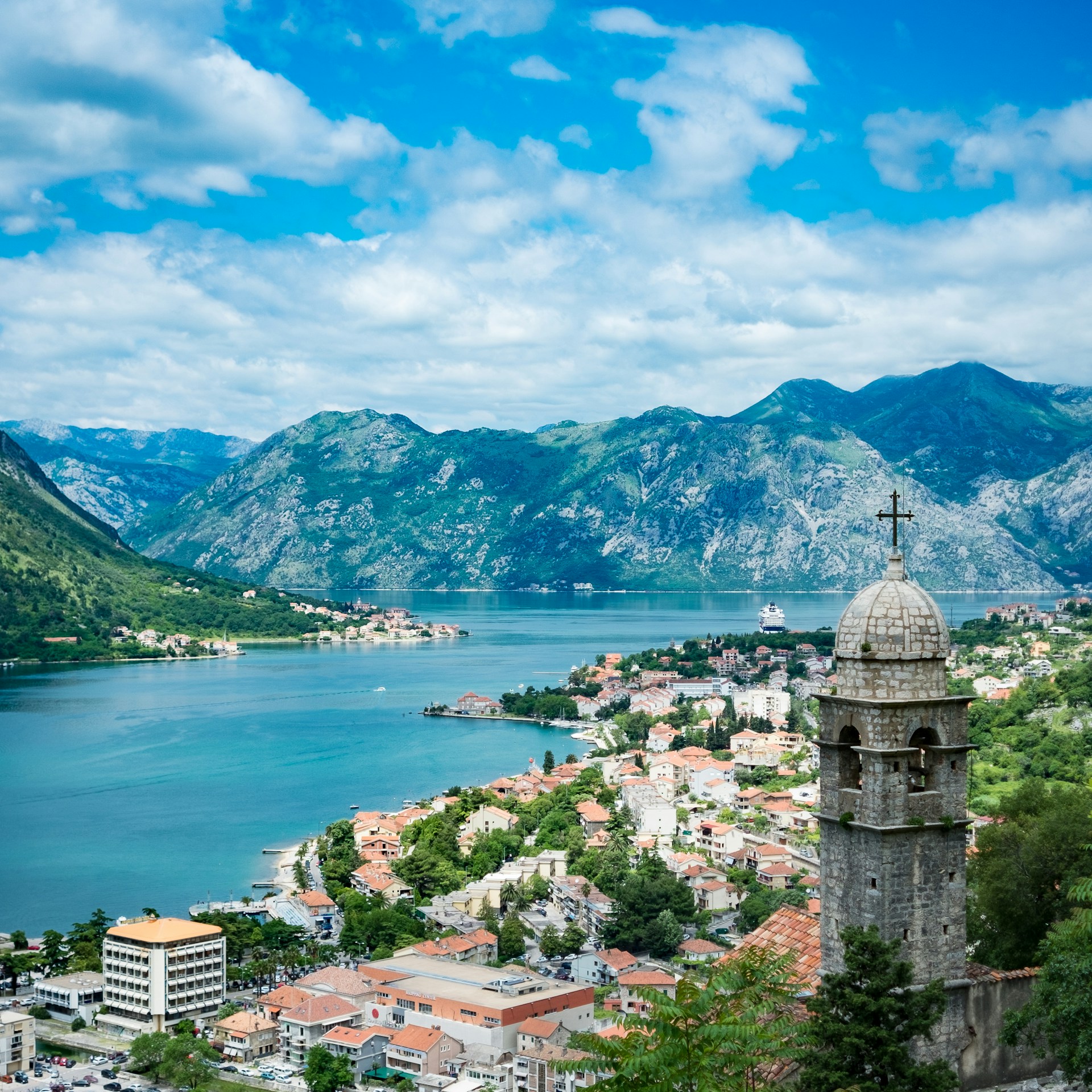
Fly into Tivat or Podgorica and head straight to Kotor. The old city’s Venetian walls are one of the few genuinely unmissable sights in the entire region — not because tourism says so, but because walking the 4.5-kilometer circuit of medieval fortification above the city at dawn, before the cruise passengers arrive, is simply extraordinary. Book a room inside the walls or in the quiet Dobrota village just north of the bay for a more local feel.
On day two, drive the perimeter of Boka Kotorska. The bay isn’t actually a fjord — it’s a submerged river canyon, which explains its narrow profile and the way the mountains drop almost vertically into the water. Stop at Perast to take the short boat ride to Our Lady of the Rocks, a 15th-century church built on an artificial island that fishermen gradually constructed over centuries by sinking old boats loaded with stones.
Days 3–4: The Budva Riviera and Sveti Stefan
The drive south from Kotor to Budva takes under an hour, but the visual shift is dramatic. Budva’s old town — a walled medieval settlement on a small peninsula — is genuinely beautiful in the early morning before the day heats up. The beaches immediately around Budva get very busy; drive a few kilometers further south to Pržno or Sveti Stefan for something calmer.
Sveti Stefan itself, the famous islet connected to the shore by a narrow causeway, is now an Aman resort. You can’t walk onto the island unless you’re a guest, but the view from the public beach to its north is the image most associated with Montenegro internationally. If you want to eat there, Aman does offer day visitor dining options — expensive, but the setting is genuinely singular.
Day 5: The Drive North — Cetinje and Lovćen
This is the day most pre-packaged tours skip, which is reason enough to include it. The road from Budva up to Cetinje via the old serpentine — 25 hairpin bends carved into the Lovćen massif — is one of the most compelling drives in the Balkans. Take it slowly. The views back over the coast at the top are panoramic in a way that genuinely stops conversation.
Cetinje was Montenegro’s historic capital and still feels more like a small town than a city. The Cetinje Monastery, home to relics including what is claimed to be the hand of John the Baptist, operates quietly and seriously — it’s a working religious community, not a museum. Dress accordingly and approach it with respect.
wp:image {“id”:18}

/wp:image
Days 6–7: Durmitor National Park
The drive from the coast to Žabljak, the main town inside Durmitor National Park, takes roughly three hours depending on your route. The landscape transition is stark — you leave Mediterranean vegetation behind somewhere around Nikšić and climb into a high plateau world of glacial lakes, black pine forests, and peaks that reach 2,522 meters at Bobotov Kuk.
Black Lake (Crno Jezero) sits at 1,416 meters and offers an easy two-hour walk around its perimeter. The Tara River Canyon — 1,300 meters deep at its maximum, the deepest canyon in Europe — begins just outside the park boundary and can be seen from several viewpoints on the plateau rim. White-water rafting on the Tara is commercially organized from multiple operators in Žabljak; the section through the canyon is genuinely technical in spring and mellower by August.
Crossing Into Albania: Making the Most of the Region
If your trip allows more than a week, the logical extension of any solid Montenegro travel itinerary is Albania. The border crossing at Muriqan, between Ulcinj and Shkodër, is straightforward — EU and US passport holders don’t require visas for either country. The Albanian Alps, specifically the Valbona-Theth trail, sits less than four hours from Kotor and offers mountain walking of a standard that rivals anywhere in the Balkans.
At Inside Balkan, we’ve spent considerable time building itineraries that combine both countries — the Montenegrin coast, Durmitor, then south into Albania’s lake district and highlands. If you’re curious about who we are and how we approach regional travel, you can read more on our About Us page, where we explain our approach to honest, depth-first Balkan travel planning.
Practical Notes for Your Montenegro Itinerary
Getting Around
Renting a car is the single best decision you can make for a Montenegro trip. Public transport connects the main towns, but the places that make Montenegro worth visiting — the Durmitor rim roads, the Lovćen serpentine, the small bays south of Petrovac — are either inaccessible or impractical without your own vehicle. Car rental is available at both Tivat and Podgorica airports; book in advance during peak season.
Currency and Costs
Montenegro uses the Euro despite not being an EU member state. In 2026, budget accommodation along the coast runs from €30–60 per night for a decent private room; mid-range hotels in Kotor’s old city typically start around €100. Durmitor is noticeably cheaper than the coast. Food in local konobas (traditional restaurants) is excellent value — expect to pay €8–15 for a full meal with a local beer.
Language
Montenegrin is the official language, mutually intelligible with Serbian, Croatian and Bosnian. English is widely spoken in tourist areas and among younger people throughout the country. Away from the coast and in smaller mountain villages, you may find that a few words of Serbian — or simply a willingness to communicate through gestures, phones and patience — goes a long way.
Safety and General Conditions
Montenegro has a low violent crime rate for visitors and a well-established tourism infrastructure on the coast. Road conditions are generally good on main routes; secondary mountain roads can be narrow, unpaved, and require careful navigation — this is especially true on the approaches to Prokletije near the Albanian border. Download offline maps before you go. Mobile data coverage is reliable across most of the country including Durmitor.
What Travelers Who’ve Done This Route Tell Us
The consistent pattern we hear from travelers who’ve followed a structured Montenegro travel itinerary is that they wish they’d allocated more time in the north. The coast is extraordinary, but Durmitor and the Tara Canyon tend to become the emotional center of the trip — the part people talk about for years afterward. Read more about how others have experienced Balkan travel through our traveler reviews and testimonials, where regional itinerary feedback is especially detailed.
Frequently Asked Questions About Montenegro Travel Itineraries
How many days do I need for a Montenegro travel itinerary?
Five days covers the absolute minimum — Kotor, the coast, and one day in the mountains. Seven to ten days allows you to move properly between the bay, the Budva Riviera, Cetinje, and Durmitor without feeling rushed. Two weeks opens up the possibility of combining Montenegro with northern Albania, which we strongly recommend for a complete Balkan experience.
What is the best base for exploring Montenegro?
There’s no single best base because the country’s regions are genuinely distinct. Kotor works well as a starting point — it’s centrally accessible, has excellent accommodation variety, and sits at the head of the bay that defines the northern coast. For Durmitor, Žabljak is your only real base. Budva serves the southern coast but has a different energy from Kotor — more commercial, younger, louder.
Is Montenegro safe for solo travelers?
Yes, by any reasonable measure. Solo travelers — including solo women — move through Montenegro without significant issues. Standard travel awareness applies: don’t leave valuables visible in parked cars, be thoughtful about late-night navigation in unfamiliar areas, and inform someone of your hiking plans if heading into remote sections of Durmitor or Prokletije without a guide.
Can I combine Montenegro with Albania in one trip?
Absolutely, and many experienced Balkan travelers consider this the ideal itinerary structure. Montenegro’s southern coast connects naturally with northern Albania via Ulcinj and Shkodër. The Albanian Alps and Lake Shkodër add a completely different dimension to the trip. No visa is required for EU, UK, US, Canadian or Australian passport holders in either country.
What should I not miss on a Montenegro travel itinerary?
Beyond the obvious — Kotor’s old city, Sveti Stefan, Black Lake — don’t miss the Ostrog Monastery, built into a near-vertical cliff face above the Zeta valley. It’s one of the most visually startling religious sites in Europe and deeply significant to Orthodox Christians. The drive up to it alone is worth the detour. Also: eating fresh fish at a konoba in Perast or Dobrota, away from the tourist waterfront menus, is one of the most straightforward pleasures the country offers.
Is renting a car necessary in Montenegro?
For most Montenegro travel itineraries involving Durmitor, Cetinje, or anywhere beyond the main coastal strip, yes. The coastal towns are connected by reasonably frequent buses, and Kotor to Budva is an easy local bus route. But the real rewards of Montenegro — the mountain roads, the hidden bays, the canyon viewpoints — require your own transport. Factor it into your budget from the start.

Garyalb86
Travel writer and Balkan enthusiast sharing stories and tips from Albania and beyond.
View All Posts