Albania: The Best Country in the Balkans — A Complete Expert Guide
Table of Contents
- Introduction: Albania Rising as the Balkans’ Top Destination
- Geography and Landscape Diversity Overview
- Albanian Riviera vs Other Balkan Coastlines
- The Albanian Alps and Mountain Adventure
- History and UNESCO Heritage Sites
- Albanian Culture and Besa Hospitality Tradition
- Food Scene and Culinary Identity
- Value for Money Compared to Neighbors
- Ease of Travel and Visa-Free Access
- Wildlife and Nature Conservation Highlights
- Best Regions to Visit Across Albania
Introduction: Albania Rising as the Balkans’ Top Destination
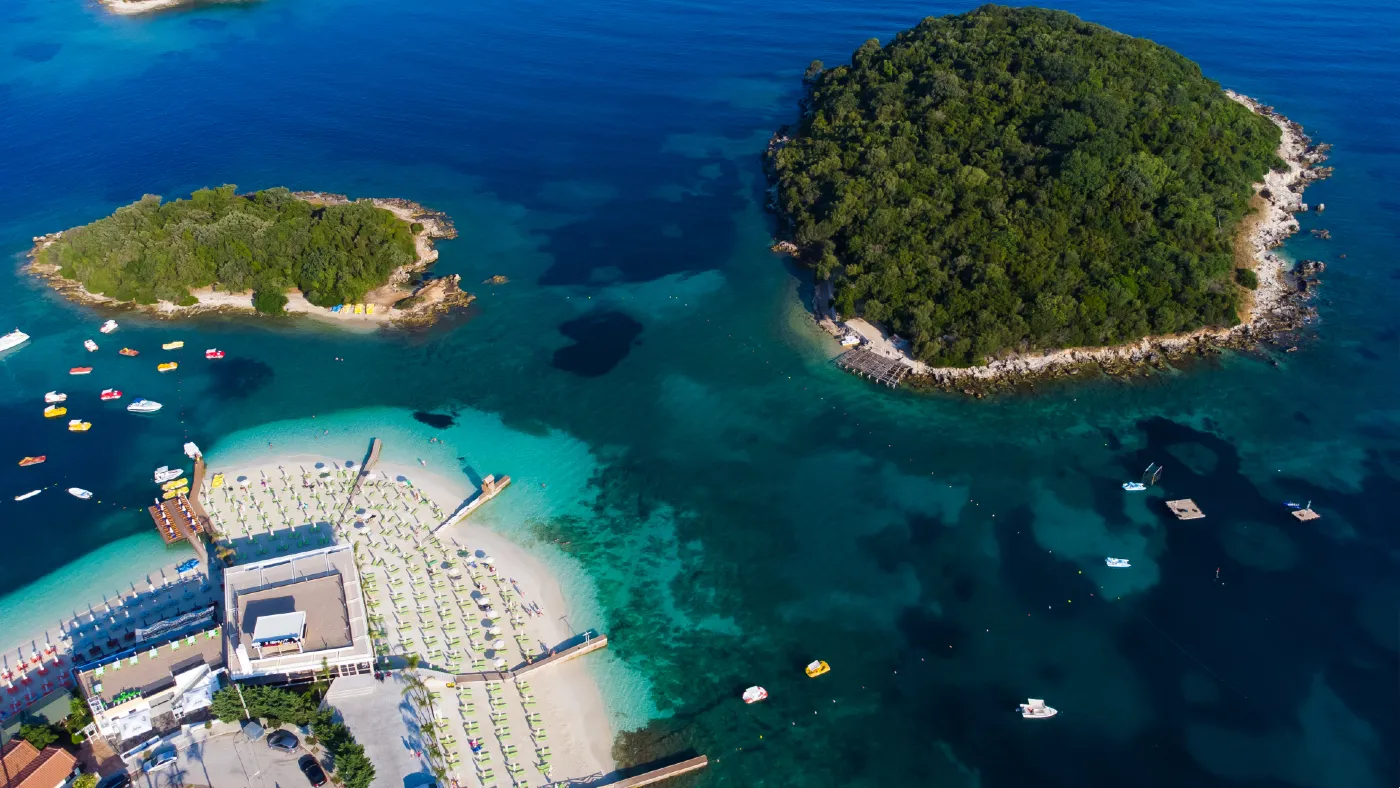
There is a moment, somewhere between descending into the jade waters of Ksamil and standing in the Ottoman-cobbled alleys of Gjirokastra, when it becomes impossible to argue against the conclusion: Albania is the best country in the Balkans. Not the most famous — not yet — but indisputably the most rewarding for the traveler willing to look beyond the well-worn tourist circuit of Dubrovnik and Santorini.
At Inside Balkan, we have spent years guiding travelers through every corner of southeastern Europe, from the Dalmatian coast to the Macedonian highlands. We have watched Albania transform from an overlooked curiosity into one of the most electrifying travel destinations on the continent. The numbers are catching up: international arrivals to Albania have surged year on year, and seasoned travelers who have already exhausted Greece, Croatia, and Montenegro are arriving in droves — and almost universally, they say the same thing: “Why did we wait so long?”
This pillar page is your definitive guide to understanding exactly why Albania earns that top-of-the-Balkans title. We cover the geography, the culture, the food, the cost, the safety, the wildlife, and the practical logistics — and we link you to the specialist deep-dives your planning requires. Whether you are comparing destinations, building a multi-week Balkan itinerary, or simply trying to convince a skeptical travel companion, everything you need is here.
Explore more at insidebalkan.com or browse our curated Albania experiences to begin planning your trip.
Geography and Landscape Diversity Overview
Albania occupies roughly 28,748 square kilometres on the western edge of the Balkan Peninsula — a territory smaller than Belgium — yet it packs in a range of landscapes that most countries three times its size cannot match. Within a single day’s drive, you can move from sub-alpine meadows threaded with glacial rivers in the north, through fertile river valleys and ancient lake basins in the centre, down to a Mediterranean coastline in the south where limestone cliffs drop directly into turquoise water.
The country shares land borders with Montenegro to the north, Kosovo and North Macedonia to the east, and Greece to the south. To the west, the Adriatic and Ionian seas provide 476 kilometres of coastline — a figure that surprises most first-time visitors who associate long coastlines only with Croatia or Greece. That dual-sea position matters enormously for travellers: the Adriatic beaches in the north near Shëngjin tend to be shallower and family-friendly, while the Ionian coast south of Vlorë — the famous Albanian Riviera — delivers dramatic cliff scenery and water clarity that rivals anything in the eastern Mediterranean.
Internally, the Albanian Alps (Bjeshkët e Namuna) dominate the north, with peaks exceeding 2,600 metres. The central lowlands around the Shkumbin River Valley were historically the cultural dividing line between the Gheg-speaking north and the Tosk-speaking south — a linguistic and cultural geography that still shapes regional identity today. The south-east is anchored by Lake Ohrid and Lake Prespa, two of Europe’s oldest and most biodiverse freshwater lakes, both shared with North Macedonia and Greece.
- Northern highlands: rugged alpine terrain, traditional kulla (tower house) villages, glacial valleys
- Central lowlands: agricultural plains, Tirana’s urban energy, Lake Shkodra
- Southern coast (Riviera): Ionian cliff bays, olive groves, seaside villages
- South-eastern interior: Gjirokastra, Berat, Butrint, ancient Illyrian and Greek sites
- Eastern lakes region: Ohrid and Prespa, wetland bird habitats, border mountain trails
This geographic compression is one of Albania’s defining competitive advantages over its neighbours. You do not need to choose between beach holiday and mountain adventure — in Albania, you can have both in the same week.
wp:image {“id”:370}
/wp:image
Albanian Riviera vs Other Balkan Coastlines
The Albanian Riviera is the single most talked-about feature of the country among first-time visitors, and the hype is entirely justified. Stretching roughly 100 kilometres from Vlorë in the north to Sarandë in the south, this Ionian coastline is defined by a succession of sheer limestone headlands, hidden coves, and beaches whose water colour ranges from pale jade in the shallows to deep cobalt offshore. Village names — Dhërmi, Himara, Palasë, Borsh, Lukova, Ksamil — roll off the tongue like a Mediterranean poem.
What separates the Albanian Riviera from the Croatian Dalmatian coast or the Greek islands is not just aesthetics but atmosphere and economics. The Riviera remains, by the standards of comparable Mediterranean coastlines, dramatically underdeveloped in the tourist-infrastructure sense: there are no cruise ship terminals disgorging ten thousand day-trippers into a medieval town square, no €30 sun-lounger fees, no kilometre-long queues at cable cars. In high season, popular spots like Gjipe Beach (accessible only on foot or by boat) or the Sazan Island day trips retain an intimacy that has long vanished from Hvar or Mykonos.
Water quality on the Riviera is consistently high. The Blue Flag programme has been slower to formally designate Albanian beaches largely due to administrative processes rather than water quality failures, but independent testing by EU-adjacent monitoring bodies places Ionian Albanian waters among the cleanest in the region. Visibility in the water routinely exceeds 15 metres, making it outstanding for snorkelling and free-diving even without specialist equipment.
For the full depth on individual beaches, coves, and how to navigate the Riviera from north to south, see our Albanian Riviera beach guide — which covers everything from the best family beaches to secluded spots only reachable by hiking trail.
We also recommend reading our broader Balkan Riviera Travel Guide: Albania & Montenegro | Inside Balkan, which contextualises the Albanian coast within the wider Adriatic-Ionian region and helps travellers understand how the two coastlines compare in practice.
The Albanian Alps and Mountain Adventure
If the Riviera is Albania’s calling card to the beach crowd, the Albanian Alps are its claim on the hearts of hikers, trekkers, and adventure travellers. The Valbona Valley and Theth are the two poles of this northern mountain world — connected by the famous day hike across the Valbona Pass (approximately 16–18 km, 1,200 metres elevation gain) that has become one of the great Balkan walking routes of the past decade.
The Peaks of the Balkans is the transboundary trail network that links Albania, Kosovo, and Montenegro across 192 kilometres of high-altitude terrain. Completed sections of this trail pass through some of the most remote and visually spectacular landscapes in Europe — places where traditional highland villages still operate under century-old codes of honour, where shepherds move their flocks vertically with the seasons, and where the only mobile signal is the occasional bar caught on a ridgeline at 2,000 metres. For trekkers who have exhausted the Swiss Alps or the Scottish Highlands, the raw, unmanicured quality of Albanian mountain terrain is genuinely revelatory.
Accommodation in the northern highlands has evolved considerably. The traditional guesthouse (bujtina) model, where a local family provides a room, home-cooked meals, and logistical advice, remains the dominant form of accommodation in Theth and Valbona — and it is, frankly, a superior experience to the anonymous mountain lodge model of more commercialised Alpine destinations. Sleeping in a room above a wood-fired kitchen, with a host who can tell you precisely which ridge line gives the best view of Maja Jezercë (Albania’s highest peak at 2,694 m), is not something a boutique hotel in the Dolomites can replicate.
Our Albanian Alps trekking and Peaks of the Balkans guide covers route planning, difficulty ratings, seasonal logistics, accommodation booking, and gear considerations in comprehensive detail. We also offer a dedicated Walking in Albania 8-Day Hiking Tour | Inside Balkan for those who want expert-guided access to the northern highlands with all logistics handled.
wp:image {“id”:369}
/wp:image
History and UNESCO Heritage Sites
Albania’s historical depth is disproportionate to its size and is one of the most consistently underestimated aspects of the country for first-time visitors. The territory has been, at various points in its history, a core province of the Illyrian kingdom, a battleground between Rome and Macedonia, part of the Byzantine Empire, an independent principality under Gjergj Kastrioti Skanderbeg (the national hero who held off the Ottoman advance for decades), an Ottoman vilayet for five centuries, a communist isolationist state for nearly fifty years under Enver Hoxha, and finally a post-1991 democracy that has moved with remarkable speed toward EU integration.
Each of these layers left physical traces. Albania currently has three UNESCO World Heritage Sites:
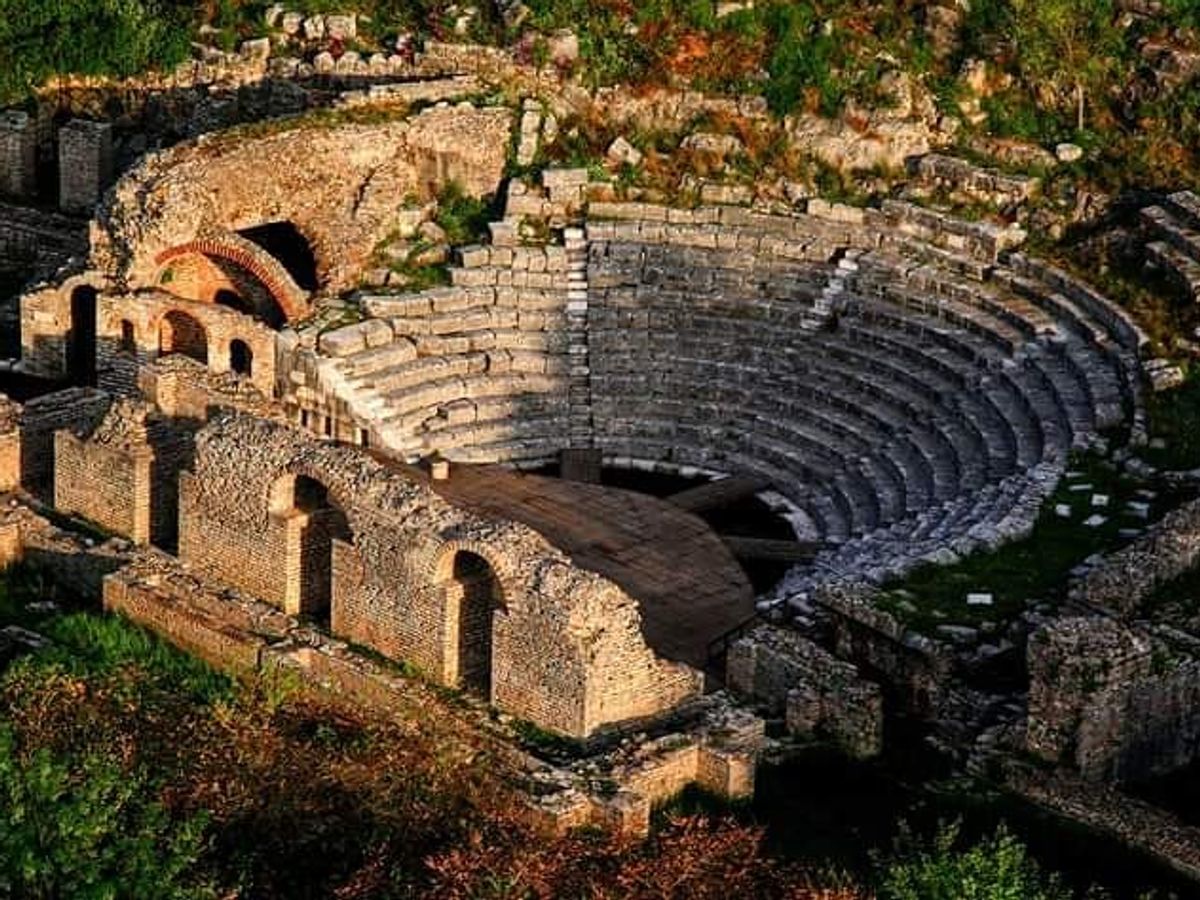
- Butrint (designated 1992): An ancient Illyrian, Greek, Roman, Byzantine, and Venetian city on a forested peninsula near Sarandë — arguably the most archaeologically stratified site in the Balkans, where you can walk from a Hellenistic theatre to a Roman baptistery to a Venetian tower within the space of thirty minutes.
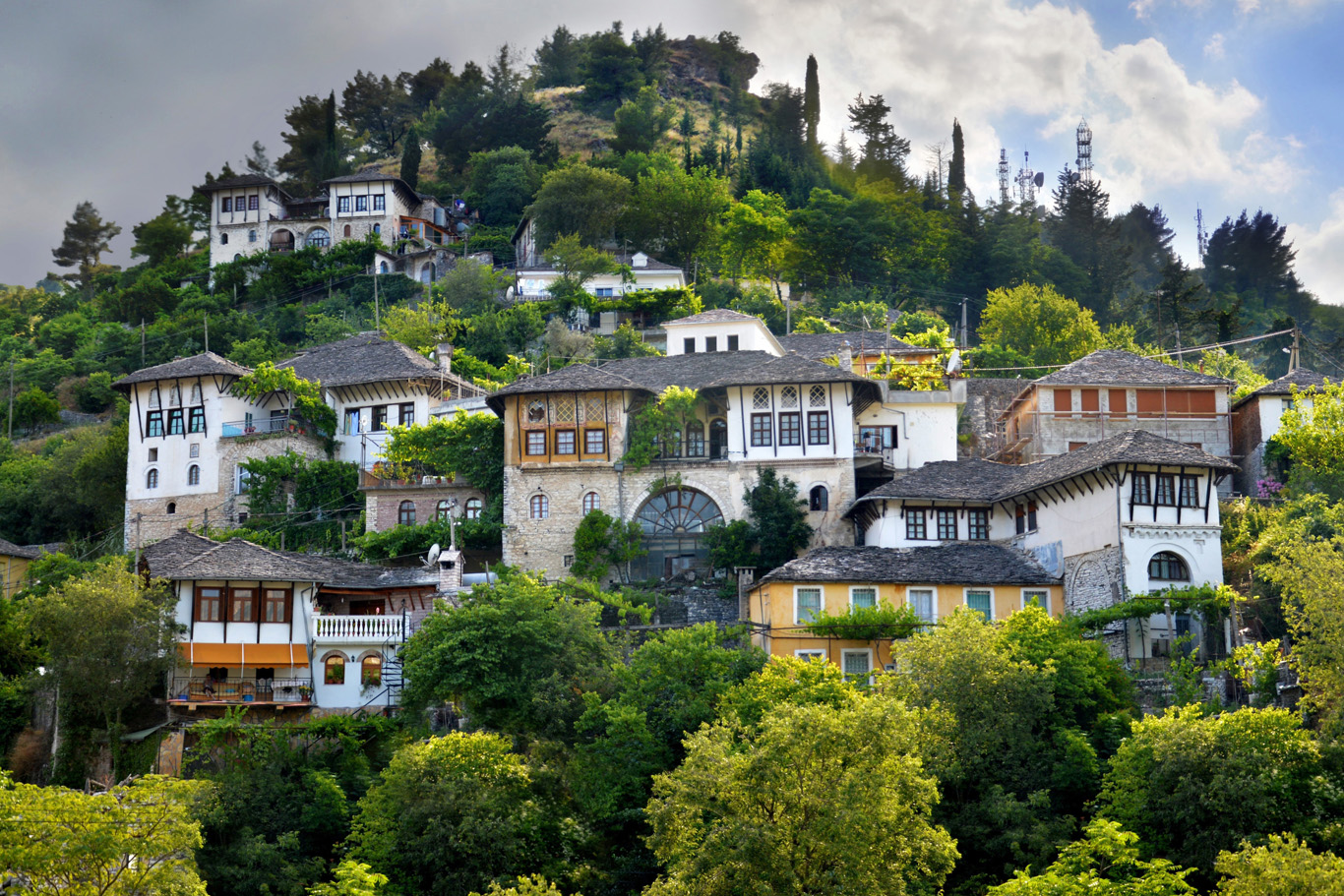
- Berat (designated 2005, extended 2008): The “city of a thousand windows,” a living Ottoman townscape of whitewashed houses stacked on a hillside, dominated by a Byzantine-era castle that has never ceased to be inhabited — making Berat one of the rare examples of a continuously occupied medieval fortress city in Europe.
- Gjirokastra (designated 2005): The birthplace of both Enver Hoxha and Nobel Prize-nominated writer Ismail Kadare, Gjirokastra’s Ottoman stone architecture is among the best-preserved in the entire Balkan region. The bazaar, the castle, and the kullë (tower house) mansions open to visitors form one of the most coherent historic urban environments we have encountered anywhere in southeastern Europe.
Beyond the UNESCO sites, Albania’s historical landscape includes the ancient Illyrian city of Apollonia (near Fier), the early Christian mosaics of Lin on Lake Ohrid’s shore, the Rozafa Castle above Shkodra with its Illyrian-era foundations, and hundreds of Enver Hoxha’s concrete bunkers — 173,000 of them were built between the 1960s and 1980s, and they remain the country’s most surreal (and uniquely photogenic) historical footnote.
For comprehensive site-by-site coverage, visitor logistics, and contextual history, read our Albania UNESCO heritage sites in depth guide.
Albanian Culture and Besa Hospitality Tradition
No conversation about Albania is complete without addressing Besa — the concept at the moral centre of Albanian highland culture. Besa (literally “word of honour” or “oath”) is a code of conduct enshrined in the Kanun, the customary law codified in the 15th century by Lekë Dukagjini. Under Besa, a guest’s safety and wellbeing becomes the absolute responsibility of the host family — not merely a social nicety but a sacred obligation that takes precedence over almost all other considerations.
This is not a museum exhibit. Albanian hospitality rooted in Besa is a living practice that shapes how travellers experience the country in 2024. We have witnessed it in guesthouses in Theth where a host walks a stranger three kilometres in the dark to ensure they reach the right path. We have seen it in the speed with which a city family in Shkodra invites a lost tourist in for coffee and insists on personally driving them to their hotel. The warmth is genuine, consistent, and culturally embedded in a way that is immediately perceptible to visitors who have spent time in more tourism-saturated destinations.
Albania is also culturally remarkable for its religious coexistence. The country is approximately 57% Muslim, 10% Catholic, and 7% Orthodox Christian by nominal affiliation, with a long tradition of Bektashi Sufism that is uniquely centred in Albania (Tirana hosts the world headquarters of the Bektashi Order). Under communism, Albania declared itself the world’s first atheist state in 1967, which paradoxically strengthened a secular cultural identity that persists today. Albanian Muslims celebrate Orthodox Christmas with their neighbours; Catholic and Muslim families in the same village share the same iftar meal during Ramadan. This inter-religious harmony is not a government talking point — it is a genuinely observed daily reality that gives Albanian society a social texture unlike anywhere else in the Balkans.
Our dedicated article on Albanian Besa and hospitality culture explained explores these traditions in depth and explains what they mean practically for visitors travelling through different regions.
wp:image {“id”:368}
/wp:image
Food Scene and Culinary Identity
Albanian cuisine operates at the intersection of Mediterranean, Ottoman, and Illyrian pastoral traditions — and the result is a food culture that is simultaneously deeply familiar and distinctly its own. The raw ingredients are exceptional: olive oil pressed in the groves above Berat and Vlora, lamb raised at altitude on mountain herbs in the Albanian Alps, seafood pulled from Ionian waters that morning, vegetables grown in the rich volcanic soil of the central lowlands, and dairy products — particularly the fresh white cheese and yogurt — that are among the finest in Europe.
Core dishes every visitor should understand:
- Tavë Kosi: Albania’s national dish — a baked casserole of lamb and rice set in a yogurt-egg custard, originally from Elbasan, now claimed by every Albanian grandmother as her own recipe.
- Fërgesë: A Tirana speciality of peppers, tomatoes, and cottage cheese (or offal, in the traditional version) cooked down in a clay pot — rich, earthy, and unlike anything in neighbouring cuisines.
- Byrek: Filo pastry filled with spinach and cheese, or meat, or pumpkin — the street food backbone of Albanian daily life, sold from dedicated byrek shops that open before dawn.
- Trilece: A three-milk sponge cake soaked in cream and caramel — Turkish in origin, but so thoroughly adopted into Albanian pastry culture that it appears on every restaurant menu from Shkodra to Sarandë.
- Raki: The grape or mulberry spirit that functions as Albania’s social lubricant — home-distilled, usually offered as the first gesture of hospitality in any private home.
Restaurant pricing is another major advantage. In Tirana, a full meal with wine at a well-regarded restaurant typically costs €15–25 per person. On the Riviera, fresh-caught fish restaurants in Himara or Sarandë charge prices that would represent a starter cost in a comparable Dubrovnik establishment. Our Albanian food culture and culinary guide maps the best eating experiences region by region, from Shkodra’s lake fish restaurants to Berat’s winery restaurants to the seafood shacks of Ksamil.
Value for Money Compared to Neighbors
Cost is not the only reason to visit Albania — but it is a genuinely significant structural advantage that affects how deep and how long a traveller can explore the country. Albania uses the Albanian Lek (ALL) and sits firmly outside the Eurozone, meaning its cost base tracks domestic economic conditions rather than pan-European inflation dynamics. The result, in practical terms, is that Albania remains one of the best-value travel destinations in Europe by almost any metric.
A mid-range daily travel budget in Albania — covering accommodation in a comfortable guesthouse or three-star hotel, three meals, local transport, and entry fees — typically runs to €50–80 per person. The equivalent experience in Croatia or Montenegro runs to €120–180. In Greece, particularly on the islands, €200 per day is realistic for comparable quality. This is not a marginal difference — it is a transformative gap that allows travellers with a fixed budget to spend twice as long in Albania, eat at significantly better restaurants, and upgrade their accommodation compared to what they could afford in competitor destinations.
Key cost benchmarks:
- Accommodation: Guesthouse bed in Theth or Valbona: €20–35 per person including dinner and breakfast. Three-star hotel in Tirana: €50–80 per room. Boutique hotel on the Riviera in peak season: €70–120.
- Food: Street byrek: €0.80–1.50. Sit-down lunch: €5–10. Dinner with wine: €12–25.
- Transport: Furgon (shared minibus) between cities: €2–6. Taxi within Tirana: €2–5.
- Activities: UNESCO site entry (Butrint, Berat castle): €3–8. Boat trip to Ksamil islands: €10–15.
For a detailed, category-by-category cost analysis, our complete Albania travel cost guide provides 2024-updated figures across all major expense categories and travel styles, from backpacker to premium.
Ease of Travel and Visa-Free Access
Albania has one of the most accessible entry regimes in the Balkans for Western travellers. Citizens of the EU, UK, USA, Canada, Australia, and most other Western nations enter visa-free with a valid passport, with stays of up to 90 days in any 180-day period permitted under standard tourist entry. Albania is not an EU member state but is an EU candidate country, and its border management is EU-compliant. There are no onerous registration requirements, no currency declaration thresholds that cause practical difficulties, and no restrictions on photography in most public spaces.
Getting to Albania has become progressively easier. Tirana International Airport Nënë Tereza (TIA) now receives direct flights from most major European hubs — London Heathrow and Gatwick, Rome, Milan, Vienna, Zurich, Amsterdam, Istanbul, and numerous others — operated by a mix of full-service carriers (British Airways, Lufthansa) and low-cost operators (Wizz Air, easyJet, Ryanair). Flight times from western Europe are typically 2–3 hours. Overland entry via the Kosovo border at Morinë, the Montenegro border at Hani i Hotit, or the Greek border at Kakavijë are all well-maintained crossings with generally efficient processing.
Within Albania, the transport network has undergone substantial infrastructure investment since 2010. The SH4 motorway connecting Durrës to Tirana and northward to Shkodra and the Kosovo border is well-maintained and significantly reduces north-south journey times. The Adriatic-Ionian Highway (the famous “Blue Corridor”) linking Vlorë to Sarandë along the Riviera is partially complete but functional; the mountain road above Himarë, once notorious for hairpin difficulty, is now sealed and manageable for standard vehicles.
Mobile connectivity is solid across populated areas (ALBtelecom and Vodafone Albania both offer affordable tourist SIMs at the airport), though northern mountain areas and some interior valleys have limited coverage — which, for many trekkers, is a feature rather than a bug.
For a thorough reassurance on the safety dimension of travel logistics, our Albania safety guide for first-time travelers addresses the practical reality of travelling in Albania in 2024 with honest, evidence-based analysis.
Wildlife and Nature Conservation Highlights
Albania’s communist-era isolation — which kept large-scale agricultural intensification and industrial development out of the mountains and remote valleys — has produced an inadvertent conservation legacy. Large mammal populations that have been extirpated from most of western Europe survive in the Albanian highlands: brown bears (Ursus arctos) are present in significant numbers in the Shebenik-Jabllanicë National Park and in the borderland forests around the Dinaric Alps. The grey wolf (Canis lupus) is not a rare sighting in the northern mountains — it is a regular presence that local shepherds factor into their seasonal planning.
The Albanian eagle — the double-headed black eagle of the national flag — is not merely a heraldic symbol. The short-toed snake eagle (Circaetus gallicus) and the golden eagle (Aquila chrysaetos) are both observable in Albanian mountain habitats, and the country’s lakes and wetlands support internationally significant populations of Dalmatian pelicans, pygmy cormorants, and the greater flamingo at Narta Lagoon near Vlorë.
National parks cover approximately 14% of Albania’s territory:
- Valbona Valley National Park: Northern Alps, glacier-carved river valley, primary beech and pine forest
- Theth National Park: Dramatic limestone scenery, the “Blood Feud Tower” (Kulla e Ngujimit), endemic flora
- Prespa National Park: Shared with North Macedonia and Greece; pelican and cormorant breeding colonies, Byzantine-era lake island monasteries
- Shebenik-Jabllanicë National Park: Brown bear territory, extensive mixed forest, watershed for both Adriatic and Aegean drainage basins
- Llogara National Park: Mediterranean-subalpine transition zone on the Ceraunian Mountains above the Riviera; hiking trails with views from mountain pine down to Ionian sea
For travellers interested in wildlife observation, habitat ecology, and responsible nature tourism in Albania, our Albania wildlife and national park guide provides species lists, best observation seasons, and recommended itineraries for each protected area.
Albania vs Croatia vs Montenegro: The Honest Comparison
We are frequently asked to make the direct comparison, and we will do so honestly because we believe Albania wins on the factors that matter most to independent and experience-driven travellers — while acknowledging that Croatia and Montenegro are also genuinely excellent destinations with their own legitimate strengths.
Albania vs Croatia
Croatia has superior tourist infrastructure, longer-established international brand recognition, more developed island ferry networks, and Dubrovnik — a genuinely world-class medieval walled city. What Croatia has lost, progressively, is the sense of discovery, affordability, and unforced authenticity that defined it as a destination twenty years ago. Dubrovnik’s Old Town in peak season is, by most honest assessments, over-touristed to the point of compromised experience. Albanian beaches in high summer are busy but not overwhelmed. Croatian restaurant prices on the Dalmatian islands are now comparable to Italy; Albanian restaurants are a fraction of the cost for equivalent or superior ingredients. For the full analytical breakdown, read our Albania vs Croatia head-to-head comparison.
Albania vs Montenegro
Montenegro has the dramatic Bay of Kotor — one of the most photographed inland bays in the world — and well-developed boutique tourism infrastructure, particularly around Budva and Tivat. It adopted the euro, which makes budgeting simple but costs higher. Albania’s coastline is longer, more varied, and less crowded. The Albanian interior offers more extensive trekking terrain and more significant historical sites. For Adriatic-coast decision-making, our Albania vs Montenegro Adriatic comparison gives a region-by-region breakdown.
Albania vs Greece
Greece has millennia of established tourism infrastructure, iconic island destinations, and the deepest archaeological pedigree in the region. Albania cannot compete with Athens or Santorini on brand recognition. But for travellers who have done Greece and want comparable Mediterranean quality without the crowds or the cost, Albania — particularly the Riviera and Butrint — delivers strikingly similar sensory experiences at roughly half the price. Our Albania vs Greece Mediterranean travel comparison examines this in detail.
Best Regions to Visit Across Albania
Albania divides naturally into five travel regions, each with a distinct character and set of experiences. Understanding these regions — and how they connect — is the foundation of good Albania trip planning.
Tirana and Central Albania
The capital is the logical entry point and a destination in its own right. Tirana has undergone a remarkable visual and cultural transformation since 2000: Edi Rama’s administration (Rama is a trained artist who served as mayor before becoming Prime Minister) famously had the city’s grey communist-era apartment blocks painted in vivid geometric patterns. The result is a capital with personality — colourful, chaotic, energetic, and increasingly well-served by excellent restaurants, coffee culture, and nightlife. The Blloku neighbourhood, once reserved exclusively for the communist elite, is now the city’s bar and café heart. The National History Museum on Skanderbeg Square tells Albania’s full story in a building whose exterior socialist-realist mosaic is itself a striking artefact. Our Tirana capital city travel guide covers the city neighbourhood by neighbourhood.
Northern Albania: Shkodra and the Alps
Shkodra is the historical capital of the northern Gheg culture — a university city with an atmospheric old bazaar, Rozafa Castle, and the Marubi National Photography Museum (home to the Marubi dynasty’s extraordinary photographic record of Albanian life from the 1850s onward). From Shkodra, the road and ferry routes into the Valbona Valley and Theth begin. This is the region for trekking, cultural immersion in highland village life, and the Peaks of the Balkans trail.
Southern Albania: Berat, Gjirokastra, and the Riviera
The south concentrates Albania’s greatest density of historical sites and coastal beauty in a single roughly triangular region. Berat and Gjirokastra anchor the interior; the Riviera provides the coastal counterpoint. The town of Sarandë, directly across the water from Corfu, functions as the southern hub and the departure point for Butrint National Park and the Ksamil beaches.
Eastern Albania: Ohrid, Prespa, and the Lake District
This is the least-visited region by international tourists and arguably the most rewarding for travellers who value solitude and ecological richness. Pogradec on the Albanian shore of Lake Ohrid is a relaxed lakeside town with excellent fresh-water fish restaurants. The onward road to Korça — one of Albania’s most culturally refined provincial cities, known for its beer festival and neoclassical architecture — passes through landscapes of extraordinary beauty.
Planning Your Route
For first-time visitors trying to structure all of these regions into a coherent itinerary, our 10-day Albania first-timer itinerary provides a tested, day-by-day route that covers the highlights without feeling rushed — and for those who want to go deeper, our Albania 12 Day Tour – Cultural & Historic | Inside Balkan and Albania Trekking & Culture 15 Days | Inside Balkan extend that framework into a fully comprehensive Albanian experience.
We also offer options for those who want to combine Albania with the wider region — see our multi-country Balkans tours featuring Albania for itinerary options that pair Albania with Kosovo, North Macedonia, Montenegro, or beyond.