Albania vs Greece: Which Mediterranean Neighbor Offers More in 2024
Every summer, thousands of travelers face the same decision: book that familiar Greek island trip you’ve done before — or take a chance on the Albanian coast, which keeps showing up in your travel feeds looking suspiciously beautiful and suspiciously affordable. If you’re weighing up this exact choice right now, you’re in good company. At Inside Balkan, we spend our working lives on both sides of this border, and we’re here to give you the honest, granular breakdown that travel aggregator sites simply don’t bother with. Spoiler: Albania wins more categories than most people expect — and we’ll show you exactly why, with numbers and real traveler experiences to back it up.
Setting the Stage: What We’re Actually Comparing
This isn’t a vague “both have beaches and history” comparison. We’re placing specific destinations against each other: Saranda and Ksamil in southern Albania versus Corfu and the northern Ionian islands of Greece. These two zones sit within about 30 kilometers of each other — you can literally see Corfu from Ksamil on a clear day — yet they deliver dramatically different travel experiences in 2024. Understanding those differences is what helps you choose the right one for your actual travel style.
We’re also being upfront about our perspective. We believe Albania is an undervalued Mediterranean destination, and we’ll explain that position clearly. But we’re not going to pretend Greece has nothing going for it. Greece is genuinely world-class. The question is whether that world-class status still translates into value and experience quality for the independent traveler — and increasingly, the answer is complicated.
Water Clarity and Beach Quality: Closer Than You Think, Better in Albania
Let’s start with what most people care about most: the actual water. The Ionian Sea is shared by both destinations, which means the baseline water clarity is remarkably similar. What differs is the beach environment surrounding it.
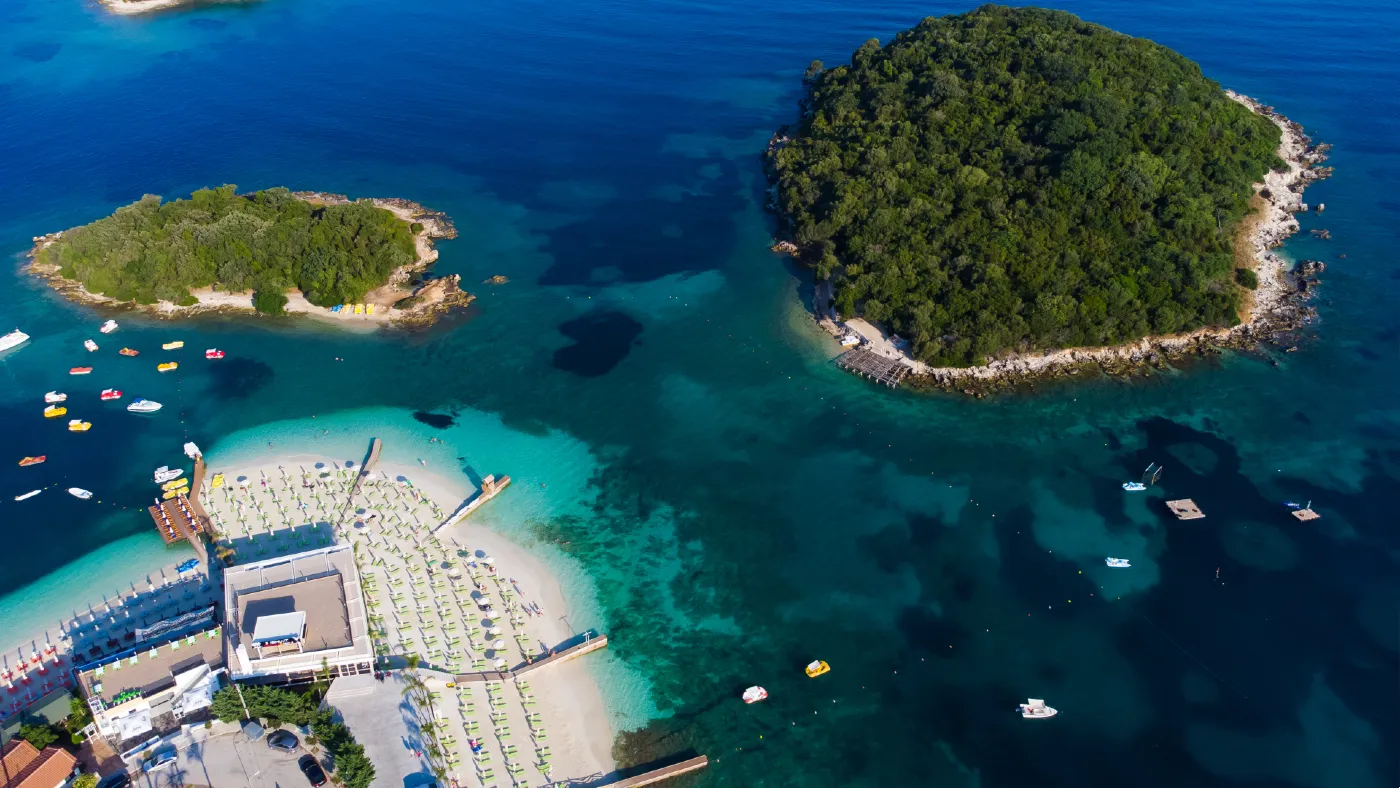
Ksamil’s lagoon beaches — particularly the stretch facing the three small offshore islands — consistently produce some of the most photogenic turquoise water in the entire Mediterranean. The water clarity here regularly exceeds visibility of 10–15 meters. Corfu’s east coast, by contrast, tends to run shallower and slightly murkier due to higher boat traffic and the narrowness of the channel between the island and the Albanian mainland. Corfu’s west coast beaches like Glyfada and Paleokastritsa are genuinely beautiful, but in high season they’re packed in a way that fundamentally changes the experience.
The practical difference? In July and August, you can still find a quiet cove on the Albanian Riviera. Finding an uncrowned beach on Corfu in the same months requires either a very early alarm call or a long hike. For our team, that crowd differential alone shifts the equation significantly.
wp:image {“id”:370}
/wp:image
Accommodation Value: The Gap Is Bigger Than You Think
This is where the Albania vs Greece travel comparison gets really interesting — and where travelers who’ve done both tend to get a little frustrated on Greece’s behalf.
A solid mid-range guesthouse in Ksamil or Saranda — sea view, air conditioning, breakfast included — runs between €40–70 per night in peak season. The equivalent experience on Corfu, particularly anywhere near the water, will set you back €120–200 per night for comparable quality. That’s not a small gap. Over a 10-day trip, that difference funds your flights home and then some.
What’s more relevant for discerning travelers is that Albanian accommodation has matured significantly. The era of “cheap but rough” guesthouses is largely over in the southern Riviera. Family-run boutique hotels in Himara and Saranda now offer genuinely well-designed rooms, strong Wi-Fi, excellent local food, and hosts who actually know the area. This is hospitality that feels personal rather than industrial — something increasingly rare in the heavily commercialized Greek island circuit.
If you want to dive deeper into what the Albanian coast actually looks like on the ground, our Balkan Riviera Travel Guide covers the full range of accommodation options, beach access points, and practical tips for first-timers on this coastline.
Getting There: Ferry Links and Logistics
One of Greece’s traditional advantages has been infrastructure — and it’s a fair point. Getting to Corfu is easy: direct flights from most European capitals, efficient ferry links from the Greek mainland, and a well-oiled tourism machine that makes arrival seamless.
Albania has closed that gap considerably, but it hasn’t eliminated it. Tirana’s Mother Teresa Airport now handles direct connections from London, Rome, Vienna, and a growing number of European hubs. The Saranda–Corfu ferry is the key logistical link most travelers overlook: a 35-minute crossing runs multiple times daily in summer, operated primarily by Finikas Lines. This means you don’t have to choose between the two destinations — you can combine them intelligently within a single trip.
Our most popular itinerary format pairs Corfu as a one or two-night transit point with a longer stay on the Albanian Riviera, letting travelers experience both without doubling their transport costs. You can see how this kind of multi-country routing works in practice through our 14-day Montenegro, Albania, and Greece tour, which weaves all three countries into a coherent and unhurried journey.
wp:image {“id”:369}
/wp:image
Food Quality and Eating Culture: Albania’s Quiet Culinary Confidence
Greek food has a global reputation, and it’s earned. But here’s what we tell travelers who ask: Albanian food is Greek food’s quieter, more rustic, less tourist-marked cousin — and it’s often better in practice because it hasn’t been engineered for foreign palates.
In Saranda’s local tavernas and the small village restaurants scattered along the Riviera, you’re eating food that hasn’t been adjusted for tourist expectations. Grilled fresh fish pulled from the Ionian that morning. Byrek — flaky pastry filled with spinach and gjizë cheese — for a couple of euros. Tavë kosi, a baked lamb and yogurt dish from the interior. Raki distilled by someone’s grandfather. The wine, particularly from the Berat and Permet regions, is genuinely good and priced at levels that make Greek island wine lists look like a mild form of extortion.
In Corfu, the food is excellent — but the closer you get to the tourist corridors of Corfu Town or Sidari, the more the menus start to blur into a predictable rotation of moussaka and souvlaki priced for visitors who aren’t paying close attention. That’s not a criticism of Greek food; it’s an observation about what mass tourism does to eating culture everywhere.
Heritage and History: Greece Has More, But Albania Is Less Crowded
Greece is one of the most historically significant landscapes on Earth, and that’s not a competition Albania can or should try to win outright. The Acropolis, Delphi, Olympia — these are world-heritage experiences with no real equivalent.
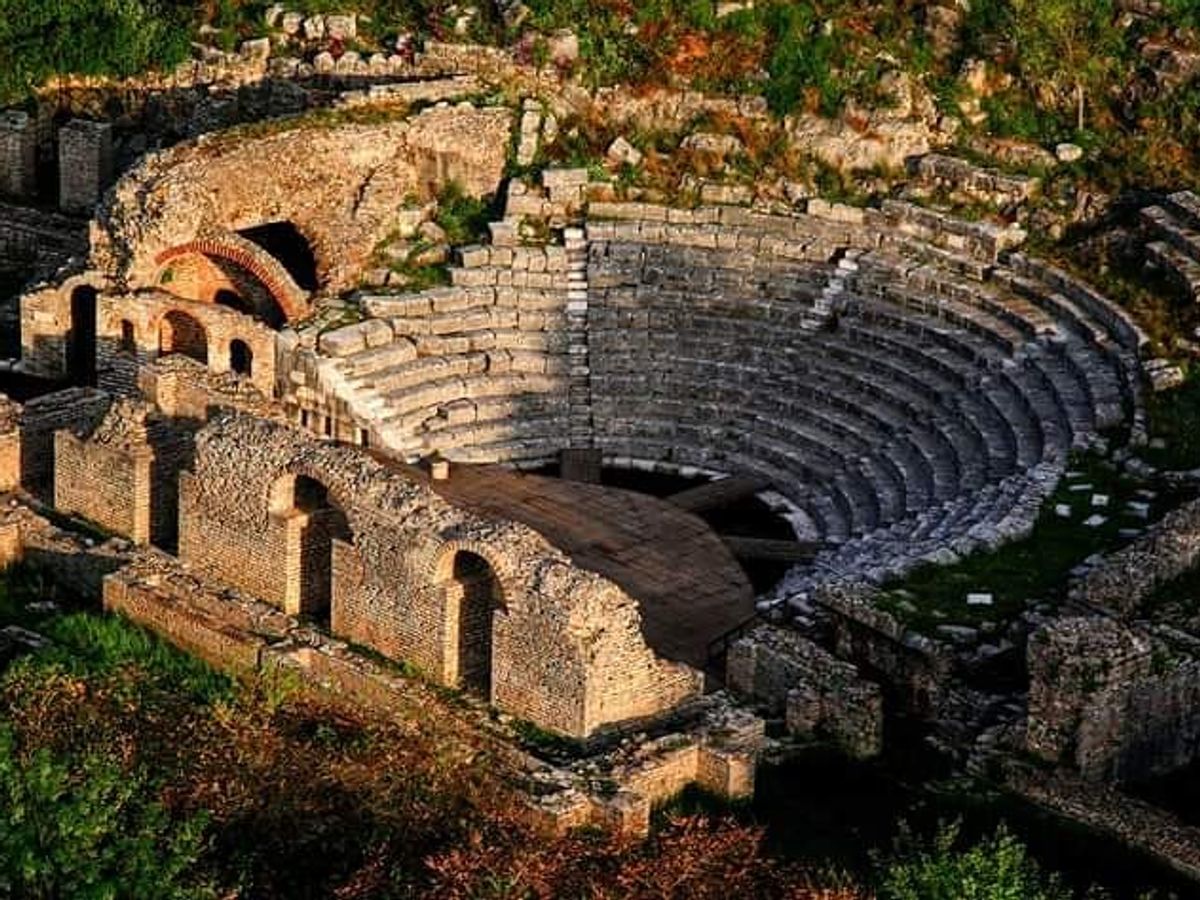
But in the specific geographic zone we’re comparing — southern Albania versus Corfu and the northern Ionians — the historical offering is surprisingly balanced. Butrint National Park near Saranda is a UNESCO World Heritage Site protecting Greek, Roman, Byzantine, and Venetian ruins in a lagoon setting of extraordinary atmospheric quality. Entry costs around €10. The site receives a fraction of the visitors that comparable Greek sites attract, which means you can actually stand in the ruins and absorb them — not photograph the back of someone’s head.
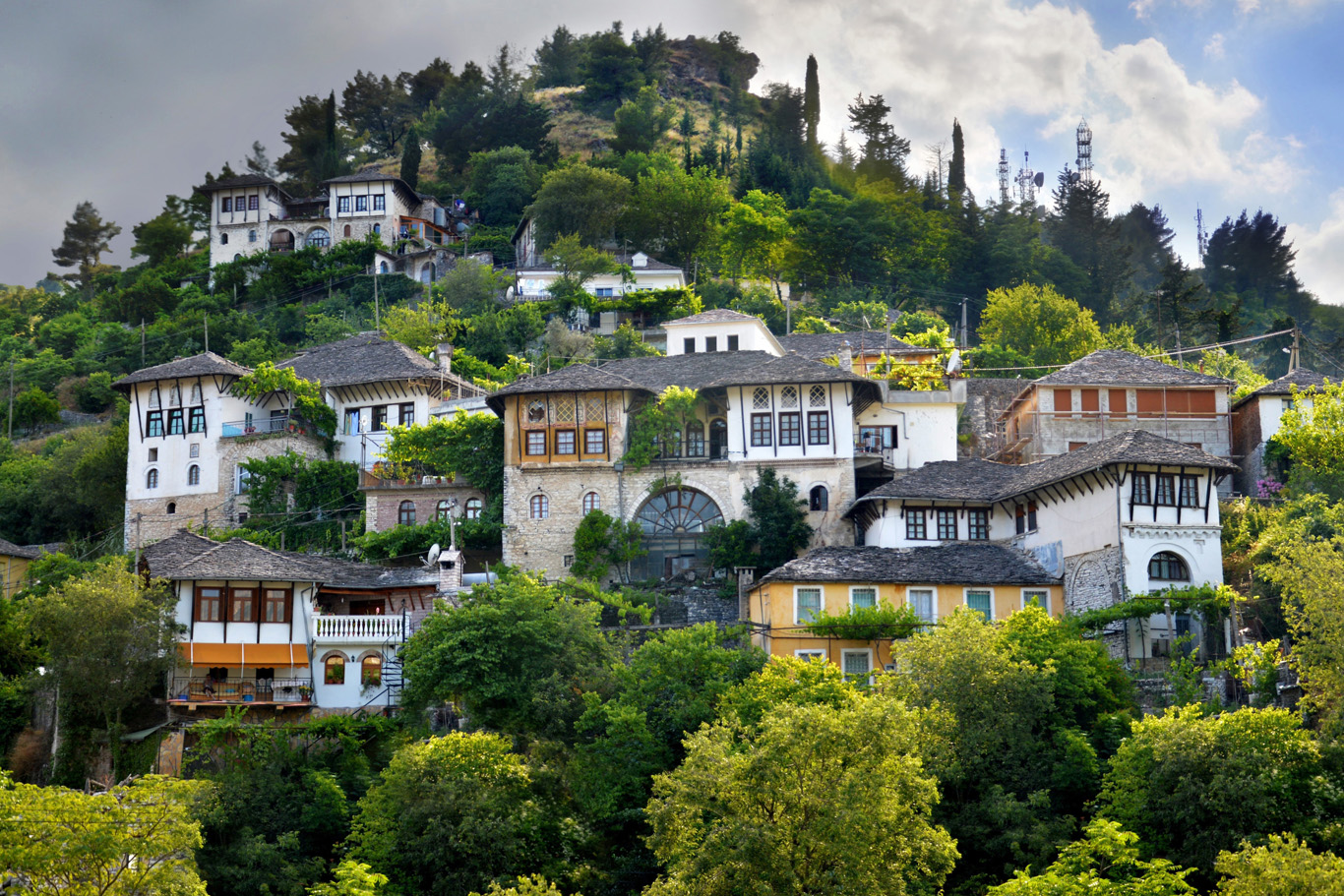
Gjirokastër, just 45 minutes inland from Saranda, is an Ottoman stone city that UNESCO listed alongside Berat as one of the best-preserved historic towns in the Balkans. Corfu Town is beautiful and Venetian in character, but it’s also thoroughly discovered — the cruise ship schedule dictates its rhythms in peak season in a way that can feel overwhelming.
For travelers who want to pair coastal time with genuine cultural depth, the interior of southern Albania offers a richness that most visitors to Greece’s islands simply don’t access. Our Albania 12-day cultural and historic tour was designed specifically to move between these coastal and inland heritage layers in a sequence that makes each feel earned rather than rushed.
wp:image {“id”:368}
/wp:image
Crowd Levels in 2024: The Deciding Factor for Many Travelers
Greece’s overtourism problem is no longer a niche concern — it’s been covered by mainstream media internationally, and it’s shaping how thoughtful travelers make decisions. Santorini introduced visitor caps at Oia in 2023. Athens in August is a test of endurance. Even the “less discovered” Greek islands featured in travel magazines three years ago are now reliably saturated from June through September.
Albania is operating at a fundamentally different scale. Tourist arrivals have grown fast — from roughly 5 million in 2019 to an estimated 10 million in 2023 — but the country’s coastline is long, the infrastructure is decentralized, and the development patterns mean crowd concentration is much lower per kilometer of beach. You can drive 20 minutes south of Saranda and find yourself on a beach with a handful of other people and a small family-run bar. This isn’t because Albania lacks appeal — it’s because it hasn’t yet been algorithmically optimized into everyone’s default summer choice.
That window matters. It’s part of what makes this comparison so timely in 2024 specifically. Albania is in a moment — well-developed enough to be genuinely comfortable, not yet crowded enough to have lost its character. Our experts consistently point to this as one of the central pillars of the case for visiting Albania now rather than waiting.
The Verdict: Who Should Choose Which
We’ll be direct. Greece is the better choice if you want:
- Maximum transport convenience and frequent international connections
- A very wide range of high-end resort accommodation
- The iconic landmark experience — Acropolis, Santorini, Delphi
- A destination your whole group already knows how to navigate
Albania is the stronger choice if you want:
- Equivalent or better water and beach quality at 40–50% lower daily cost
- UNESCO-level history without the queues and cruise crowds
- Food culture that feels local and alive rather than tourist-calibrated
- The genuine feeling of being somewhere not yet fully discovered
- Space — actual, physical, uncrowded space — on the beach in July
The Albania vs Greece travel comparison in 2024 doesn’t really produce a winner in a sports-score sense. It produces clarity about what kind of traveler you are and what you’re actually optimizing for. But if your honest answer is “I want the Mediterranean to feel like it still has surprises in it” — Albania is where you should be going.
This is part of a broader pattern we’ve been tracking closely at Inside Balkan, and it’s precisely why Albania is emerging as the best Mediterranean-Balkan destination for a growing segment of experienced European travelers who’ve already done the Greek circuit and want something that delivers more per day spent.
Frequently Asked Questions
Is Albania safe for tourists compared to Greece?
Yes. Southern Albania — particularly the coastal zone around Saranda, Himara, and Ksamil — is very safe for tourists. Petty crime rates are low, locals are genuinely hospitable toward visitors, and the main practical considerations are road conditions on mountain routes rather than personal security. Greece is also safe, so this isn’t a meaningful differentiator between the two destinations.
Can I visit both Albania and Corfu on the same trip?
Absolutely, and we’d recommend it. The Saranda–Corfu ferry makes this straightforward. Spend a night or two in Corfu Town on arrival or departure, and use the Albanian Riviera as your main base. It’s one of the smartest trip structures in this part of the Mediterranean.
Do I need a visa for Albania as an EU or UK citizen?
No. EU citizens and UK passport holders can enter Albania visa-free for stays up to 90 days. The border crossing from Corfu via ferry is simple and fast — typically under 15 minutes of formalities in off-peak conditions.
How do Albanian beaches compare to Greek beaches for families?
Very well, particularly Ksamil, which has shallow, calm, warm water ideal for children. Facilities have improved significantly — sunbeds, beach bars, and restaurants are all readily available. The lower crowd density actually makes family beach time easier and more relaxed than comparable spots on Corfu in peak season.
When is the best time to visit for the Albania vs Greece comparison?
June and September are ideal months for both destinations. July and August deliver maximum heat and the best sea temperatures (typically 26–28°C in both locations), but crowds in Greece peak sharply during these months. In Albania, July and August are busy but not overwhelmed — the experience quality holds up better than in Greece during peak weeks.
Plan Your Trip with Inside Balkan
We’ve been building itineraries across this corner of the Mediterranean for years, and we’re well placed to help you design a trip that makes the most of what both sides of this border offer — or commits fully to the Albanian experience if that’s the direction your research is taking you.
If you’re interested in combining coastal time with mountain trekking and cultural depth, take a look at our Albania Trekking and Culture 15-day itinerary, which moves from the Riviera beaches through the Albanian Alps and back through the Ottoman heritage cities of the south.
For bespoke planning, trip questions, or help choosing between itinerary formats, visit us at insidebalkan.com — our team responds to every inquiry with actual trip expertise, not automated responses.

Garyalb86
Travel writer and Balkan enthusiast sharing stories and tips from Albania and beyond.
View All Posts