Balkans in April: Weather and Travel Tips
April is one of the best months to visit the Balkans, with temperatures ranging from 12°C to 22°C (54°F–72°F) across most of the region. Crowds are minimal, accommodation costs run 20–40% lower than summer peak rates, and the landscapes are vivid with spring color. Expect some rain — typically 8–12 rainy days per month — but nothing that disrupts a well-planned trip.
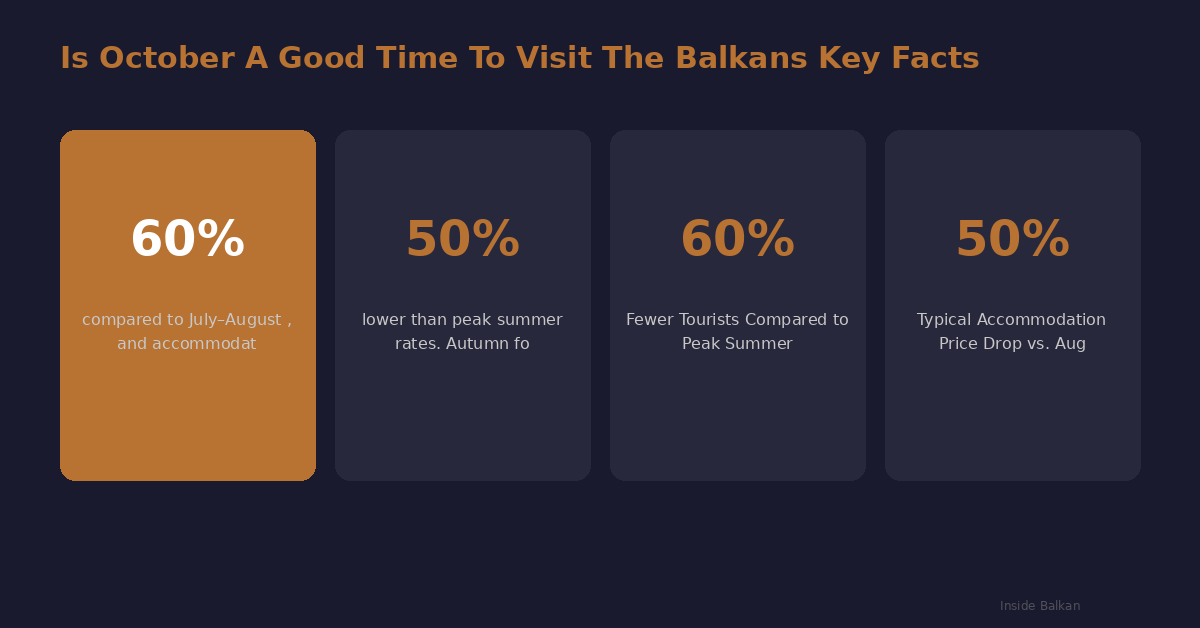
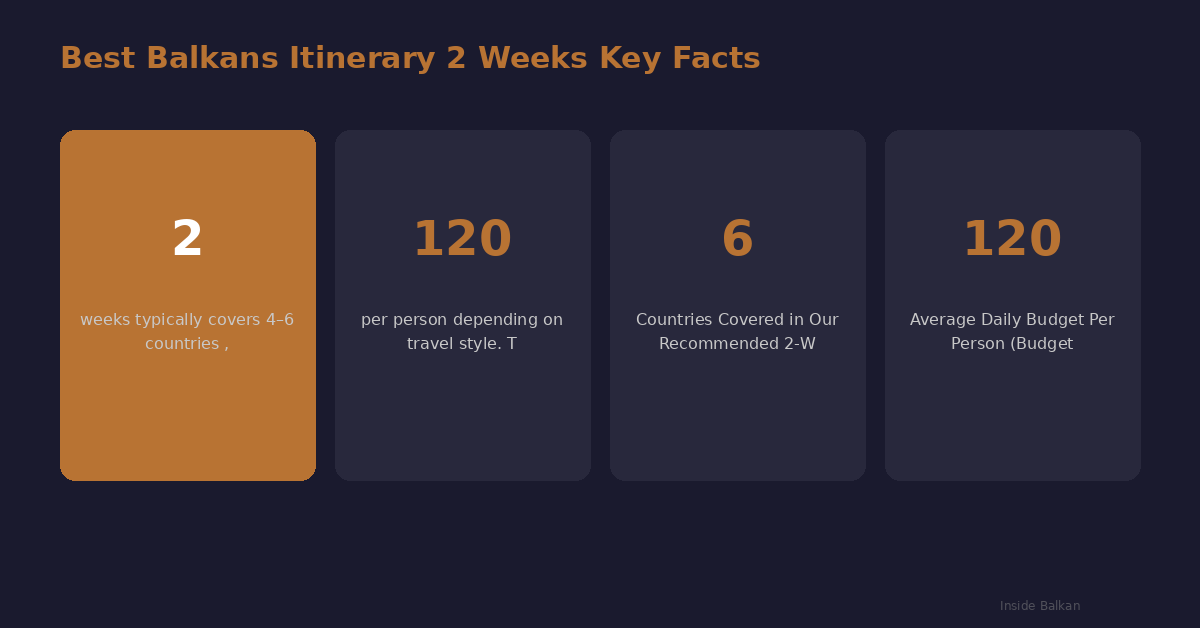
12°C–22°C
Average April temperature range across the Balkans
30–40%
Average savings on accommodation vs. July–August
8–12 days
Typical rainy days in April across most Balkan cities
13–14 hrs
Daylight hours in April — ideal for sightseeing
Roughly 4.2 million international tourists visited the Western Balkans in the first quarter of 2025, and travel analysts expect April 2026 figures to exceed that benchmark as word spreads about the region’s spring appeal. For anyone curious about the Balkans in April, the weather and travel conditions represent a genuinely compelling window — warm enough to hike, cool enough to walk cities for hours, and quiet enough to actually enjoy major sites without the summer gridlock.
At Inside Balkan, we plan itineraries across this region year-round, and April consistently stands out as the month where effort-to-reward ratio peaks. You’re catching landscapes that look almost theatrical — snow-capped Dinaric Alps reflecting in turquoise rivers, wildflowers carpeting Macedonian hillsides, and coastal towns in Croatia and Montenegro coming alive after months of winter quiet. The infrastructure is fully operational, local restaurants and guesthouses are open, and you’re not fighting for photos at Mostar’s Stari Most or Kotor’s city walls.
That said, April in the Balkans isn’t uniform. A traveler arriving in Tirana will experience something quite different from someone crossing into northern Albania or spending time in Serbia’s interior. Understanding the micro-climatic variation across the region — and packing and planning accordingly — is what separates a smooth spring trip from a frustrating one.
wp:image {“id”:941}
/wp:image
April Weather Country by Country
The Balkans span roughly 500,000 square kilometers and cover Mediterranean coastlines, continental plains, and alpine interiors — so “Balkans in April” weather varies significantly depending on where exactly you’re headed.
| Country / City | Average High (°C) | Average Low (°C) | Rain Days | Sea Temperature |
|---|---|---|---|---|
| Dubrovnik, Croatia | 18°C | 11°C | 9 days | 15°C (not swimmable) |
| Tirana, Albania | 20°C | 10°C | 10 days | N/A (inland) |
| Sarajevo, Bosnia | 16°C | 6°C | 12 days | N/A (inland) |
| Kotor, Montenegro | 18°C | 9°C | 11 days | 15°C (not swimmable) |
| Belgrade, Serbia | 18°C | 8°C | 10 days | N/A (inland) |
| Skopje, North Macedonia | 19°C | 8°C | 9 days | N/A (inland) |
| Pristina, Kosovo | 16°C | 5°C | 11 days | N/A (inland) |
| Ohrid, North Macedonia | 17°C | 6°C | 9 days | Lake: 10°C |
The coastal strip — particularly the Croatian Dalmatian coast and Montenegrin riviera — runs warmer and drier than inland destinations. Sarajevo, sitting at around 500 meters elevation, can still produce cold evenings in early April, sometimes dropping to 4°C overnight. Northern Albania and Kosovo’s Rugova region may see late-season snow at higher elevations well into April, which matters if you’re planning mountain activities.
Pro Tip
If your April itinerary includes any mountain routes — Valbona Valley, Prokletije, or Durmitor — check trail conditions the week before departure. Snow can linger above 1,500 meters through mid-April, and some canyon roads in Montenegro and northern Albania open on rolling schedules depending on snowmelt.
What to Pack for the Balkans in April
Packing for Balkans in April weather requires a layering strategy rather than a single-season approach. The temperature swing between a sunny Dubrovnik afternoon (easily 20°C) and a Sarajevo morning (potentially 5°C) can catch travelers badly underprepared if they’ve only read a headline average.
A reliable framework: pack for two seasons simultaneously. You’ll want a mid-layer fleece or light down jacket for mornings and evenings, plus at least one packable rain jacket (not just a light windbreaker — April showers can be persistent). Comfortable walking shoes that handle cobblestones and occasional wet pavement are essential; sandals are premature for most of April except at the very warmest coastal spots.
- Base layers: 3–4 breathable t-shirts or light long sleeves
- Mid layer: Fleece or light down jacket
- Outer layer: Packable waterproof rain jacket
- Bottoms: Mix of jeans/trousers and one pair of lighter pants; shorts are mostly unnecessary until late April on the coast
- Footwear: Waterproof walking shoes or trail runners; pack a compact pair of slip-on shoes for evening meals
- Accessories: Small umbrella or rain hat, light scarf, sunscreen (UV index rises noticeably by April)
One commonly overlooked item: a small dry bag or pack cover. Market visits, open-air sites, and day hikes all become less enjoyable when your camera and documents get soaked by a surprise downpour.
wp:image {“id”:940}
/wp:image
April Travel Costs: What to Budget
One of the strongest arguments for visiting the Balkans in April is the pricing environment. The region hasn’t yet entered its high season, and accommodation rates, tour prices, and even some transport fares sit noticeably below summer benchmarks.
| Budget Category | Budget Traveler (per day) | Mid-Range Traveler (per day) | Comfort Traveler (per day) |
|---|---|---|---|
| Accommodation | €15–25 (hostel/guesthouse) | €45–70 (boutique hotel) | €90–150 (upscale hotel) |
| Food & Drink | €10–15 | €20–30 | €40–60 |
| Local Transport | €3–6 | €8–15 | €20–35 |
| Activities & Entry | €3–8 | €10–20 | €25–50 |
| Daily Total (estimate) | €31–54 | €83–135 | €175–295 |
Albania consistently comes in as the most affordable destination in the region regardless of season — a mid-range day in Tirana or Gjirokastër runs €50–70 including accommodation, meals, and entry fees. We explore this in depth in our guide to Albania as the best country in the Balkans, which covers not just costs but the overall value proposition.
Planning a Balkans Trip in April 2026?
Our team builds custom spring itineraries across the region — from coastal Croatia and Montenegro to the highlands of Albania and Kosovo. Get specific route suggestions, packing advice, and real cost breakdowns tailored to your travel style.
Top Destinations to Visit in April
Not all Balkan destinations perform equally well in April. Some locations shine precisely because of spring conditions; others are better suited to different seasons. Here’s where April genuinely delivers.
Mostar, Bosnia & Herzegovina — The crowds that pack Stari Most in July and August simply aren’t there in April. You can photograph the bridge at golden hour without forty other tourists in frame, and the surrounding hills are a deep spring green that summer heat eventually bleaches out. Average daytime temperatures of 18°C make walking the old town completely comfortable.
Ohrid, North Macedonia — One of the Balkans’ most underrated destinations, Ohrid and its lakeside setting are at their most photogenic in April. The lake itself is too cold for swimming, but the surrounding trails, the ancient churches, and the town’s characteristic wooden architecture all look exceptional in spring light. Accommodation costs roughly 35% less than in August.
Kotor, Montenegro — The UNESCO-listed old town and the surrounding bay reward slow exploration, which April’s quieter atmosphere allows. The fortress hike above town (1,350 steps) is far more enjoyable at 18°C than the 35°C it reaches in peak summer.
Albania’s Riviera — Himara, Saranda, and the stretch toward Gjipe Canyon are accessible and stunning in April without the influx of Albanian city dwellers and international visitors that defines July. Our complete guide on the best time to visit the Balkans covers how different coastal destinations compare month by month.
Belgrade, Serbia — Spring is arguably the city’s best season. The Sava and Danube riverbanks come alive with outdoor cafés, parks like Kalemegdan fill with locals enjoying the first real warmth, and the cultural calendar is active. Belgrade in April feels lived-in and energetic without the tourist saturation it experiences later in summer.
wp:image {“id”:373}
/wp:image
April Events and Festivals Across the Region
April brings several significant cultural events that add real depth to a Balkans itinerary in 2026. Orthodox Easter typically falls in late April (April 19 in 2026 for Eastern Orthodox communities), which means religious celebrations, traditional markets, and specific food customs are active across Serbia, North Macedonia, Montenegro, and Bosnia. This is genuinely worth planning around — attending an Orthodox Easter liturgy in a Serbian monastery or watching traditional processions in a Macedonian village is a cultural experience that no summer festival replicates.
In Albania, the Dita e Verës (Summer Day) festival in Elbasan is celebrated on March 14, but its cultural echoes and related village celebrations extend into early April in some areas. The Gjirokastër region in particular hosts local music and food gatherings through the spring that connect to traditional Albanian folk culture.
Important Note on Orthodox Easter Travel
During Orthodox Easter week (late April 2026), accommodation in Serbian and Macedonian cities books out quickly, particularly in smaller towns near active monasteries. If your travel dates overlap with Easter, secure accommodation at least 6–8 weeks ahead. Transport also gets busy — book intercity buses and any rail connections in advance.
Getting Around the Balkans in April
April is a functional month for Balkan overland travel. Most border crossings operate normally, bus networks are running full schedules, and road conditions have generally recovered from winter. For those interested in covering significant ground — say, a Tirana-to-Istanbul overland route — April is one of the most practical months to attempt it. We’ve designed exactly that route in our Balkans Overland Tour from Tirana to Istanbul, which works particularly well in spring when temperatures along the route stay manageable throughout.
Rail travel in the region is limited but rewarding where it exists — the Sarajevo-to-Mostar route and the Belgrade-to-Bar line through Montenegro are genuinely scenic. For a deeper look at mixing rail and road travel, our Balkans Rail and Road 12-Day Journey offers a structured slow-travel approach that suits April’s conditions well.
Rental cars become a strong option in April, particularly for accessing coastal areas south of Dubrovnik and the Albanian interior. Traffic is low by European standards, and spring pricing on rentals is significantly below summer rates. One practical note: some mountain roads in northern Albania (notably the Llogara Pass section and parts of the SH20 toward Valbona) may still have weather-related restrictions in early April — check with local operators before committing to those routes.
Is April a good time to visit the Balkans?
April ranks as one of the three best months to visit the Balkans, alongside May and September. The combination of mild temperatures (typically 12°C–22°C), low tourist numbers, reduced accommodation prices, and vivid spring landscapes makes it an excellent choice for first-time visitors and returning travelers alike. The main trade-off is some rainfall — expect 8–12 rainy days across most destinations — but showers are typically short and don’t define the experience.
What is the weather like in the Balkans in April?
April weather in the Balkans varies considerably by sub-region. Coastal areas (Croatia, Montenegro, southern Albania) see average highs of 18°C–20°C with milder overnight temperatures. Inland cities like Sarajevo and Pristina run cooler, with highs around 15°C–17°C and lows potentially dropping to 4°C–6°C at night. Northern mountain areas can still see snow above 1,500 meters in early April. The coast generally gets less rain than inland areas, but no Balkan destination is entirely dry in April.
Is it warm enough to swim in the Balkans in April?
Not really, for most of April. Adriatic and Ionian sea temperatures hover around 14°C–16°C in April — technically swimmable for cold-water enthusiasts, but most travelers find it uncomfortably cold. Lake Ohrid and other inland lakes run colder still. By late April at the warmest coastal spots (southern Albania’s Riviera, some sheltered Montenegrin bays), you may find it tolerably cool for a brief swim, but April in the Balkans is firmly a sightseeing and hiking month rather than a beach holiday.
How crowded is the Balkans in April?
Noticeably quieter than summer. Major sites like Dubrovnik’s old town, Mostar’s Stari Most, Kotor’s city walls, and Plitvice Lakes in Croatia see a fraction of their peak summer numbers. For context, Dubrovnik regularly hits daily visitor limits of 8,000 in summer; in April, typical daily visitor counts run 1,500–2,500. This means relaxed access to viewpoints, shorter entry queues, and more authentic interactions with locals. The tradeoff is that some seasonal businesses (beach bars, some tourist-facing restaurants) may not have opened yet in early April.
What should I pack for the Balkans in April?
Layer-focused packing works best. Essential items include a waterproof outer jacket, a mid-layer fleece or light down jacket, comfortable waterproof walking shoes, and a small compact umbrella. Shorts are mostly premature — light trousers and jeans serve better for most of the month. Sunscreen is more necessary than people expect, as UV levels rise significantly by April even when temperatures feel moderate. If you’re planning mountain activities, add warm base layers and check trail conditions before departure.
Are tourist sites and services open in April?
The overwhelming majority of tourist infrastructure is fully operational by April. Major museums, national parks, historical sites, and most restaurants operate on normal schedules. Some very seasonal coastal businesses — beachside bars, water sports operators, certain summer-only accommodations — may not open until May or June. In contrast, city-based restaurants, guesthouses, and cultural sites are reliably open. The shoulder-season advantage is real: you get full service access without the summer pricing or crowds.
How many days do I need for a Balkans trip in April?
A meaningful Balkans trip requires at minimum 10–14 days to cover two or three countries at a reasonable pace. Two weeks allows you to combine, for example, Albania and Kosovo, or Croatia, Bosnia, and Montenegro without feeling rushed. Attempting to compress six countries into a week results in spending more time on buses than actually experiencing destinations. April’s good travel conditions make longer itineraries more practical than summer, when heat can reduce afternoon activity time significantly.
Practical Tips for Planning Your April Balkans Trip
A few operational details that make a meaningful difference for April travel specifically:
- Book accommodation 4–6 weeks ahead for popular destinations like Dubrovnik, Kotor, and Mostar — even in April, quality options in the €50–90 range fill up, particularly around the Orthodox Easter period.
- Travel insurance with weather coverage is worthwhile — mountain road closures and occasional flooding in river valleys do happen in April, and having flexible rebooking is more useful than it sounds.
- Currency preparation: The Balkans use multiple currencies — Euro (Kosovo, Montenegro), Croatian Kuna equivalent (Croatia now uses Euro), Serbian Dinar, Bosnian Convertible Mark, Albanian Lek. ATMs are widely available in cities, but carry some cash for rural areas and small towns.
- Local SIM cards are inexpensive and widely available — a local SIM in each country costs €5–10 and provides reliable data coverage for navigation and accommodation coordination.
- Flexible itineraries work better than rigid ones — one unexpected rainy day is actually excellent for Sarajevo’s coffee culture, a Belgrade gallery visit, or exploring a city’s indoor market. Build in at least one unscheduled day per five days of travel.
For more in-depth planning resources, our Balkan Travel Blog covers specific destination guides, packing breakdowns, and regional travel updates that are updated regularly for 2026 conditions.
Pro Tip: April Early vs. Late April
Early April (1st–10th) still carries winter-adjacent conditions in inland and northern areas — pack accordingly. Late April (20th–30th) is noticeably warmer and more settled, and by this point the Adriatic coast genuinely feels like spring has arrived. If your dates are flexible, the last ten days of April consistently offer the best combination of warmth, low crowds, and manageable prices.
Ready to Explore the Balkans This April?
At Inside Balkan, we build itineraries that make the most of the region’s spring conditions — combining the right destinations, pacing, and local knowledge so your April trip delivers on its real potential. Browse our spring tour options or reach out through our website for a custom itinerary consultation.
Authority Resources:

Garyalb86
Travel writer and Balkan enthusiast sharing stories and tips from Albania and beyond.
View All Posts