Albanian Food Guide: What to Eat and Where Across Albania
Picture this: it’s midday in Tirana’s Pazari i Ri market, and the air carries the scent of grilled meat, fresh herbs, and something slow-baked and dairy-rich drifting from a clay pot in the back of a tiny restaurant. Vendors stack wheels of white cheese next to bundles of fresh fëshfësh (spearmint) and trays of raw qofte waiting for the charcoal. This is Albanian food in its natural state — unperformed, deeply rooted, and quietly extraordinary. For travelers who eat their way through destinations rather than simply visiting them, Albania delivers one of the most undervalued culinary experiences in all of Europe. Studies by the European Tourism Association place Albanian cuisine among the top five most “undiscovered” food traditions on the continent, yet arrivals with a genuine interest in local gastronomy have grown more than 40% since 2019. We at Inside Balkan have spent years navigating these flavors, and this Albanian food guide covers everything you need to eat — and where to eat it — across the country.
The Architecture of Albanian Cuisine: What Makes It Distinct
Albanian cuisine sits at a crossroads that no other Balkan food tradition quite replicates. It carries Ottoman layering (slow-cooked stews, pastry work, offal traditions), Illyrian pastoral heritage (lamb, dairy, wild herbs), and Mediterranean coastal influence (olive oil, fresh fish, citrus) without being reducible to any single one of those threads. The result is a cuisine built on technique as much as ingredient — patience with heat, generosity with fat, and an almost fanatical respect for seasonal produce.
Three foundational principles govern almost every Albanian table: freshness of raw material, restraint with spicing (Albanian food is rarely hot-spiced — it relies instead on the quality of the base ingredient), and communal presentation. Dishes arrive together rather than in sequence. Sharing is structural, not optional.
The Dishes You Cannot Leave Albania Without Eating
Tave Kosi — The National Dish
If there is one dish that defines Albanian food culture, it is tave kosi: a baked casserole of lamb and rice set in a thick yogurt-and-egg custard that emerges from the oven as a trembling, golden-surfaced masterpiece. The dish originates from Elbasan — and locals there will tell you, with total sincerity, that nowhere else in Albania makes it correctly. The key is the quality of the kos (strained yogurt), which must be full-fat, slightly sour, and local. In Tirana, Oda Restaurant near the National History Museum and Mrizi i Zanave in the Fishta village outside Lezhë both produce exceptional versions. Budget approximately 800–1,200 ALL (€7–10) per portion.
Fergese — Tirana’s Own
Fergese is Tirana’s signature contribution to Albanian cuisine: a skillet of slow-cooked peppers, tomatoes, and white cheese (sometimes with veal or offal) that bubbles in its own fat until it reaches a thick, almost jammy consistency. It is served with crusty bread and eaten as either a starter or a main. The dish is entirely specific to Tirana and the surrounding lowlands — ordering it in Shkodra or Gjirokastër will earn you a polite correction. In the capital’s Blloku neighborhood, a dozen traditional restaurants serve fergese, but the version at Restorant Juvenilja — operating since the communist era — remains a benchmark.
Byrek — The Pastry That Feeds the Nation
Byrek (burek in neighboring countries, though Albanians are particular about the spelling) is the everyday food of Albania: flaky filo pastry filled with spinach and white cheese, or minced meat, or leeks, or a combination. It is breakfast, it is a snack, it is emergency sustenance at midnight. Quality varies enormously — the best byrek is still hand-pulled, using dough stretched over a large table rather than bought filo sheets. In Tirana’s Pazari i Ri, several stalls open at 6am and sell byrek by weight; expect to pay 150–200 ALL (€1.30–1.80) for a generous serving. In the south, byrek me spinaq (spinach) dominates; in the north, meat fillings are more common.
Qofte — Grilled and Uncompromising
Qofte are seasoned ground meat patties — typically lamb or beef-and-lamb — grilled over charcoal and served with raw onion, tomato, and occasionally a yogurt sauce. They seem simple until you eat them properly made. The spice profile uses oregano, garlic, and black pepper almost exclusively; the fat content must be high enough that the exterior chars while the interior stays moist. Qofte are ubiquitous across Albania but reach their best form at village restaurants and roadside grills, particularly along the Elbasan–Librazhd corridor and in the old bazaar quarter of Kruja.
wp:image {“id”:368}
/wp:image
North vs South: The Gheg-Tosk Culinary Divide
Albania’s geographic and cultural division between the Gheg-speaking north and Tosk-speaking south is not merely linguistic — it runs directly through the food. Understanding this divide is the difference between a tourist’s surface reading of Albanian cuisine and a traveler’s genuine understanding of it.
In the Gheg north (Shkodra, Tropoja, the Albanian Alps), the cuisine is pastoral and mountainous: lamb is the dominant protein, cornbread (bukë misri) replaces wheat bread at many tables, and dairy — particularly fresh gjizë (a crumbly fresh cheese similar to ricotta) and thick cream — appears at virtually every meal. The influence of highland isolation is visible in the preservation techniques: air-dried meat, pickled vegetables, and smoked cheeses that would last through long winters. If you’re heading into the northern mountains — perhaps along the route covered in our Valbona to Theth hike guide — expect guesthouses to serve family-style meals built around whatever they raised or grew.
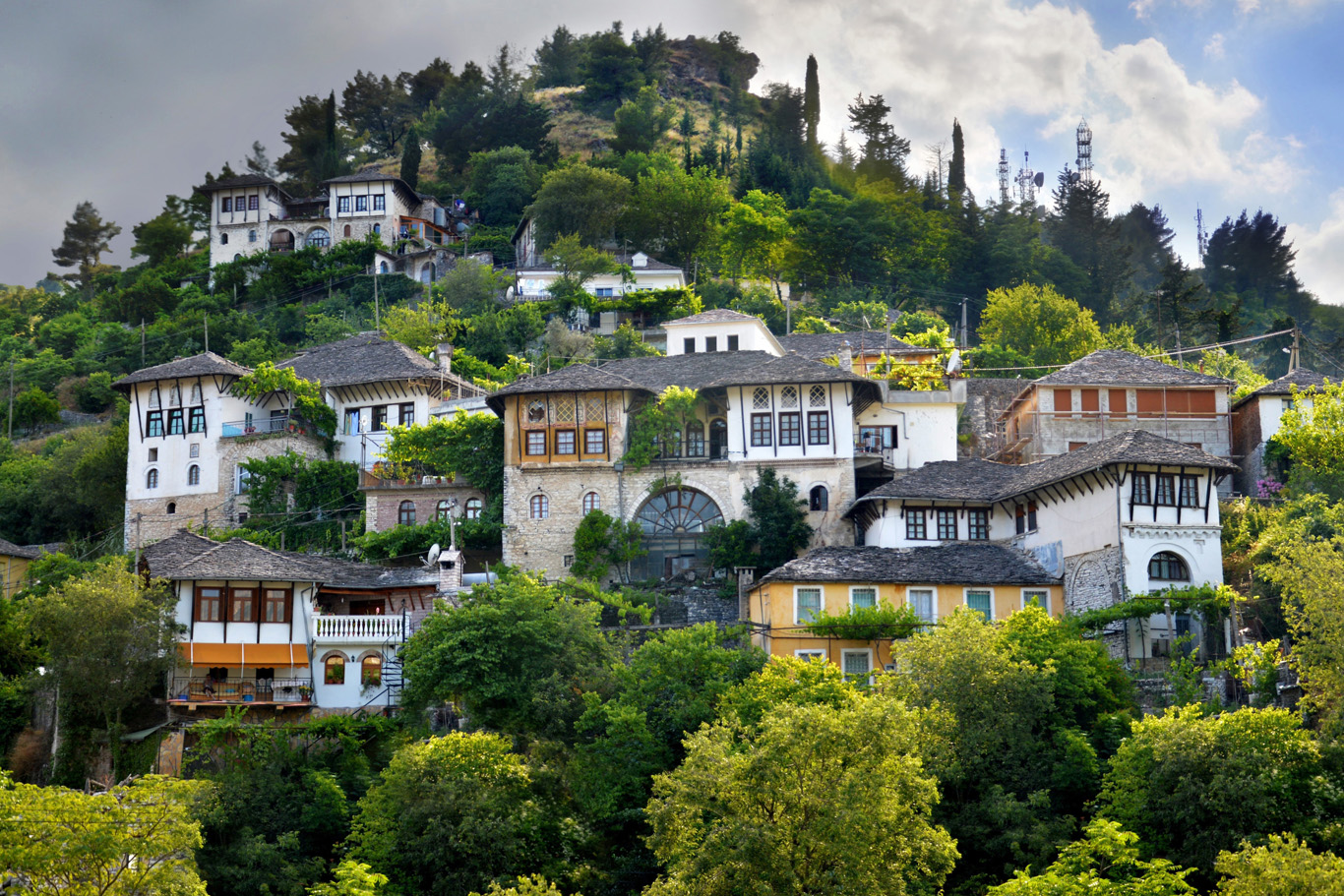
In the Tosk south (Gjirokastër, Berat, Korça, the Riviera coast), the cuisine becomes lighter, more olive oil-forward, and more influenced by both the Mediterranean and the Greek-speaking communities that historically populated the region. Lamb remains important but appears more often in slow-braised preparations with vegetables. Japrak (stuffed vine leaves), tavë me fasule (baked bean casserole), and a broader range of stuffed vegetables (gjellë me perime të mbushura) are southern staples. Korça, in particular, has a distinct culinary identity shaped by its position as a historic trade city: its restaurants serve korçarë (cornmeal porridge with butter and local cheese) alongside dishes you’d struggle to find elsewhere.
Seafood Albania: Saranda, Vlora, and the Riviera Table
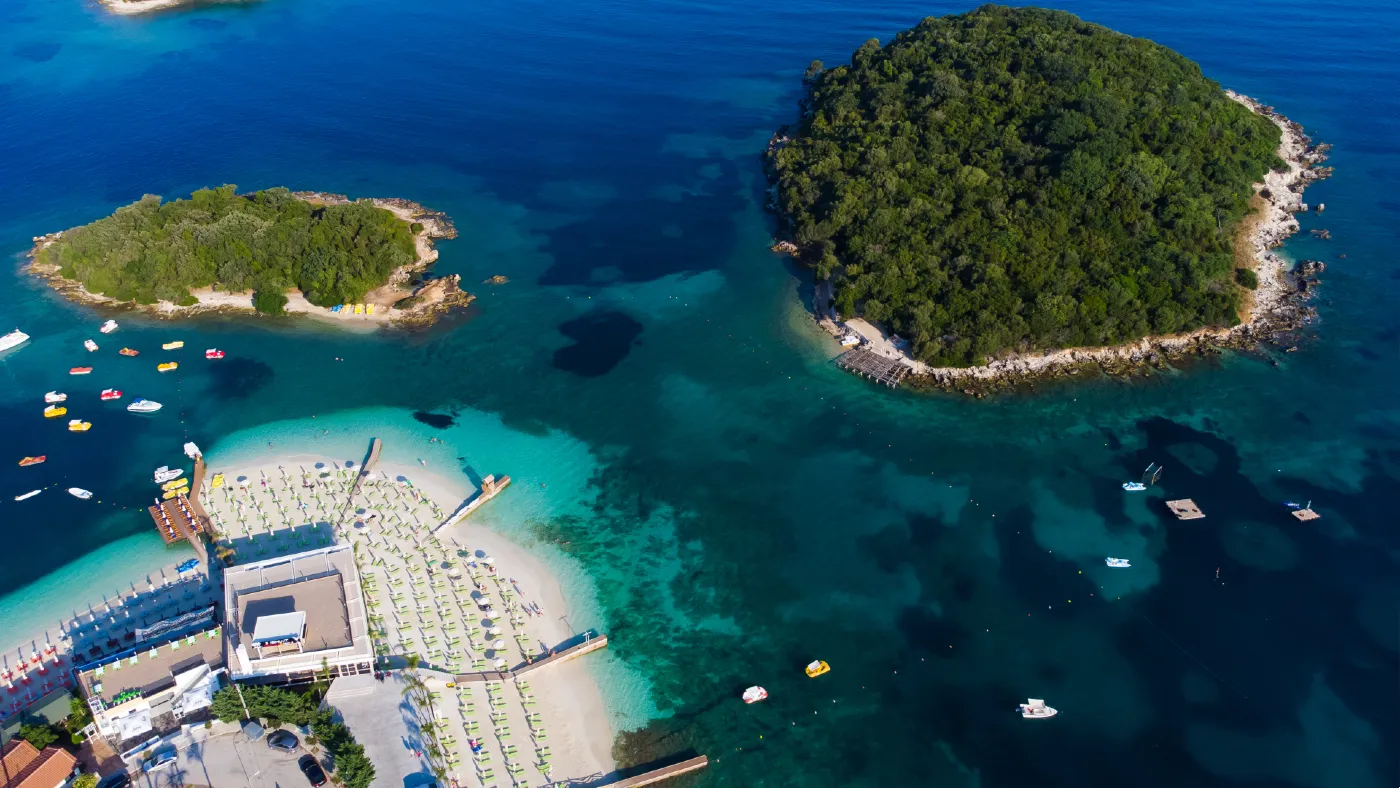
The Albanian coastline runs approximately 450 kilometers, and the seafood culture of the south is as serious as anywhere on the Adriatic or Ionian. Saranda sits on the Ionian Sea directly opposite Corfu, and its fish restaurants along the waterfront serve catches landed that morning: sea bass (levrek), gilt-head bream (koce), octopus, and squid prepared simply — grilled with olive oil and lemon — in a way that makes complexity seem unnecessary.
Vlora is arguably more interesting for food than Saranda precisely because it remains less touristified. The city’s fish market opens at dawn, and the restaurants clustered around the port district buy directly from boats. Expect to pay €15–25 per person for a full seafood meal with local wine in Vlora — approximately 40–60% less than comparable quality on the Croatian or Greek coast. Our detailed coverage of the Albanian Riviera’s best beaches also touches on where to eat well between swim stops along the coast road.
wp:image {“id”:370}
/wp:image
Tirana’s Restaurant Scene: Where to Eat in the Capital
Tirana’s food landscape has shifted dramatically since 2015. The city now supports a genuine dining culture that ranges from grandmother-run bufe (canteen-style eateries) to ambitious modern Albanian restaurants reinterpreting traditional recipes with fine-dining technique. We recommend approaching the city in three geographic zones for eating:
- Pazari i Ri (New Bazaar): The market and surrounding streets are the best place for byrek, fresh produce, traditional sweets like sheqerpare and ballokume, and casual lunch. The covered market building hosts a food hall on its upper level with multiple vendors.
- Blloku District: The former communist elite enclave is now Tirana’s most concentrated restaurant neighborhood. Quality varies, but this is where you’ll find fergese, tave kosi, and grilled meat at their most reliably prepared for visitors. Restaurants here are generally open noon–midnight.
- Kombinat and outer districts: If you want to eat where Tirana’s own residents eat on weekdays, take a short cab ride south to Kombinat, where family restaurants charge 500–800 ALL (€4–7) for full meals and menus are only in Albanian — an excellent sign.
Mountain Guesthouse Cooking: The Most Honest Table in Albania
No Albanian food guide would be complete without an honest assessment of the guesthouse (bujtina) tradition, particularly in the northern and central highlands. Staying in a guesthouse means eating what the family eats, prepared from what they grow, raise, or forage — and this often produces meals of startling quality. A typical guesthouse dinner in the Theth or Valbona valleys might include: fresh yogurt and gjizë with cornbread, a soup of garden vegetables and lamb bones, roasted lamb or kid with potatoes cooked in the same pan, seasonal salad with local olive or sunflower oil, and fruit preserves served with coffee. The cost, where charged separately, is typically €8–12 per person for the full meal.
The experience goes beyond the food itself. Mountain hospitality in Albania operates on a logic of generosity that predates the tourism economy — as we explore in depth in our piece on Albanian hospitality and the code of Besa. Being fed well in a northern guesthouse is both a culinary and a cultural education.
wp:image {“id”:369}
/wp:image
Raki and Local Wine: Drinking in Albania
Albanian food culture cannot be separated from its drinking culture, and two beverages define the table: raki and local wine. Raki — a grape or mulberry-based brandy, typically home-distilled and running 40–55% ABV — is the social lubricant of Albanian hospitality. It arrives before meals, often alongside small plates of cheese, olives, or pickled vegetables. Refusing raki is understood; accepting it and drinking it properly (slowly, with food, never on an empty stomach) is the more culturally fluent choice. The best raki we’ve encountered consistently comes from private family production in the Berat and Permet regions.
Albanian wine deserves far more international attention than it currently receives. The indigenous grape variety Shesh i Zi (a dark-skinned red) produces structured, tannic wines that pair exceptionally with lamb and grilled meat. Kallmet, grown in the Shkodra region, produces lighter, more aromatic reds. The Cobo Winery near Berat and Çobo Estate both offer tastings and export small quantities — at €6–12 per bottle domestically, these represent some of the best-value quality wines in Europe.
Practical Eating in Albania: What You Need to Know
- Meal timing: Lunch (13:00–15:00) is the main meal of the day in traditional Albanian life. Dinner is lighter and later (20:00–22:00), though Tirana’s restaurants operate on a more European dinner-focused schedule.
- Vegetarian options: Albania is more vegetarian-navigable than its meat-heavy reputation suggests. Bean casseroles, stuffed peppers with rice, byrek, and the full range of dairy dishes make plant-based eating workable — but communicate clearly, as meat stock is used liberally.
- Tipping: 10% is appropriate and appreciated at sit-down restaurants. Tipping at bufe or market stalls is not expected.
- Cost benchmarks: A full traditional meal with local wine costs €8–15 per person outside Tirana; €12–25 in the capital’s better restaurants. Street food and market eating: €1–4 per item.
- Seasonal considerations: Albanian menus follow the seasons genuinely — summer brings tomato-forward dishes, grilled fish, and fresh salads; autumn and winter shift toward slow-braised meats, legume stews, and preserved foods. If you’re planning your trip and want to understand how the food calendar aligns with travel seasons, our month-by-month Balkans travel guide provides useful context.
Frequently Asked Questions: Albanian Food for Travelers
What is the most famous Albanian dish?
Tave kosi — baked lamb and rice in yogurt custard — is widely considered Albania’s national dish. It originates from Elbasan but is found across the country and is the single dish we recommend every visitor try at least once.
Is Albanian food similar to Greek or Turkish food?
It shares influences with both but is distinct. The Ottoman pastry and slow-cook traditions overlap with Turkish cuisine; the olive oil, legume, and seafood culture has Mediterranean parallels. But the flavor profile — restrained spicing, heavy dairy use, specific indigenous ingredients — is uniquely Albanian.
Where is the best place to eat in Albania?
For the broadest range, Tirana. For the most atmospheric traditional experience, Berat or a northern mountain guesthouse. For seafood, Vlora or Saranda. Each region offers something the others don’t — ideally, you eat across all of them.
Can I eat well on a budget in Albania?
Yes — Albania is one of the few European countries where excellent, locally sourced food remains genuinely affordable. €10–15 per day covers full meals at good restaurants outside the capital.
Plan Your Albanian Culinary Journey with Inside Balkan
Albanian cuisine is, as we see it, a core reason why the country holds its position as one of Europe’s most compelling travel destinations — and it’s central to understanding Albanian cuisine as a pillar of the best Balkan experience. The food is not a side note to the landscape or the history; it is woven through both. A lamb roasting over a wood fire in a Theth guesthouse, a plate of fergese arriving at a Tirana table, octopus drying on a line above a Saranda harbor restaurant — these are Albania as much as any castle or coastline.
Our team at Inside Balkan designs itineraries that build food into the journey properly — not as a novelty excursion but as a genuine lens on Albanian culture and daily life. Whether you’re planning an independent trip or joining one of our structured tours, including our Albania North to South 14-Day Tour that moves through every major food region in the country, we can help you eat Albania the way it deserves to be eaten.
Visit insidebalkan.com to explore our Albania itineraries and get in touch with our team for personalized recommendations.

Garyalb86
Travel writer and Balkan enthusiast sharing stories and tips from Albania and beyond.
View All Posts