North Macedonia Tourism: What Actually Makes This Country Worth Your Time
Fewer than 700,000 international tourists visited North Macedonia in a recent annual count — a striking figure when you consider that neighboring countries like Croatia and Greece pull millions every season. That gap isn’t about quality. It’s about awareness. North Macedonia sits quietly in the center of the Balkan Peninsula with a remarkable depth of history, lake landscapes, canyon hiking, and Byzantine-era monasteries that most travelers completely bypass on their way elsewhere. We’ve spent years navigating this region with travelers from dozens of countries, and our consistent finding is this: North Macedonia delivers a genuinely rewarding experience that punches far above its profile. Here’s what you need to know before you go.
Why North Macedonia Tourism Is Growing — And Why That Matters Now
The country formally joined NATO in 2020 and has been in EU accession talks for years. That political stability has translated into noticeable improvements in road infrastructure, border crossing efficiency, and hospitality standards — particularly in Ohrid and Skopje. More practically for visitors: traveling now means you get a destination that’s becoming more functional and accessible while still being genuinely uncrowded. Ohrid’s old town, for instance, still feels like a living community rather than a stage set, something that’s increasingly rare in southern European heritage destinations.
North Macedonia also sits at a natural geographic crossroads. It borders Serbia to the north, Kosovo to the northwest, Albania to the west, Greece to the south, and Bulgaria to the east. That positioning makes it an ideal country to combine with neighboring destinations — and if you’re already planning time along the balkan riviera, adding North Macedonia to your route northward adds remarkable cultural contrast without adding significant travel distance.
wp:image {“id”:141}
/wp:image
Lake Ohrid: The Heart of North Macedonia Tourism
If North Macedonia has a single anchor destination, it’s Lake Ohrid. The lake itself is one of Europe’s oldest bodies of water — scientists estimate it formed somewhere between three and five million years ago — and it hosts dozens of endemic species found nowhere else on Earth, including the Ohrid trout. UNESCO recognized both the lake and the historic town on its shore as a World Heritage Site, one of relatively few locations that earned dual recognition for both natural and cultural significance.
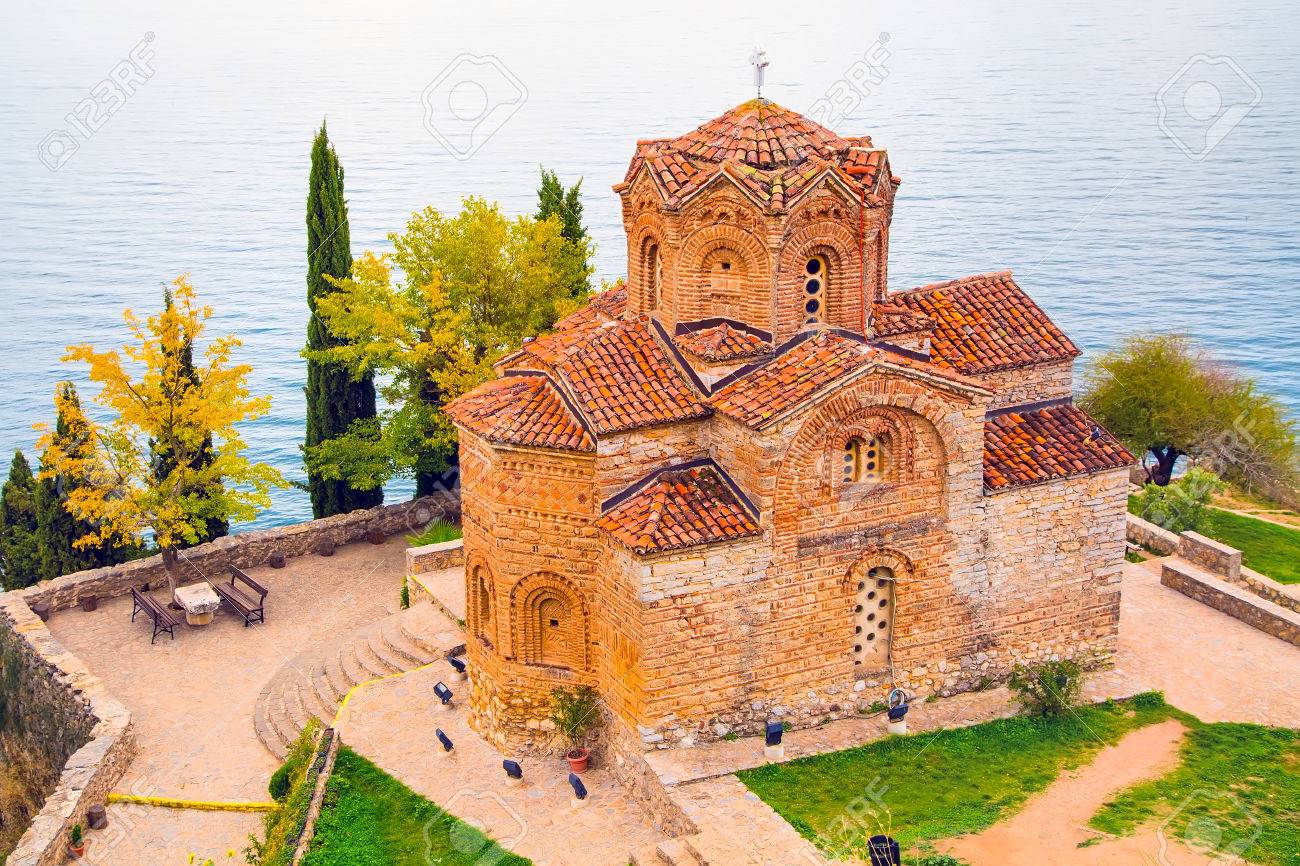
The town of Ohrid wraps around the lake’s northeastern corner with a medieval old city built on layers of civilization going back to antiquity. The Church of Sveti Jovan Kaneo, perched dramatically on a cliff above the water, is arguably the most photographed building in the entire country. But the town’s appeal goes beyond single landmarks. Walking the cobbled upper quarter, you pass Byzantine frescoes inside working churches, Ottoman-era houses with carved wooden overhangs, and excavated Roman amphitheater stones that now host summer concerts. The density of genuine historical layers in a compact, walkable area is what sets Ohrid apart from other Balkan lake towns.
Practical note: July and August bring significant crowds, particularly from North Macedonian domestic tourists and visitors from Serbia and Kosovo. We typically recommend late May, June, or September for the best balance of good weather and manageable visitor numbers. Water temperature in the lake reaches its peak in August, so swimmers should factor that in if lake access is a priority.
Skopje: A Capital City With a Complicated Identity
Skopje divides visitors more than almost any other Balkan capital. The lower city center was dramatically rebuilt after a 2010 government initiative — officially called “Skopje 2014” — which covered public squares with neoclassical statues, baroque-style facades, and ornamental fountains at a cost that generated enormous public debate. The result is genuinely unusual: a modern city that dressed itself in an architectural language borrowed from ancient empires, producing a streetscape that feels simultaneously grand and surreal.
What makes Skopje genuinely interesting, though, is the contrast. Cross the Stone Bridge over the Vardar River into Čaršija — the old Ottoman bazaar district — and the city transforms completely. This is one of the largest preserved Ottoman bazaars outside of Turkey, with hans (caravanserais), hammams, mosques, and workshop streets that retain their original function. The Daut Pasha Hammam now houses the National Gallery’s finest collection. The covered bazaar alleys are still occupied by craft workers, tailors, and small traders, not souvenir shops. Skopje’s most authentic hours are early morning in Čaršija, before tour groups arrive.
Canyon Country: Matka and Beyond
Just 17 kilometers west of Skopje’s center, Canyon Matka offers one of the most accessible wilderness experiences near any Balkan capital. The Treska River carved a deep gorge through karst limestone, and the result is a narrow canyon with vertical walls, emerald-colored water, and a series of medieval Orthodox monasteries built directly into cliff faces. Several of the monasteries date to the 13th and 14th centuries and contain frescoes that conservation experts consider significant.
The canyon also holds one of Europe’s deepest underwater caves — Vrelo Cave, which reaches at least 88 meters deep according to documented diving surveys, though full exploration remains ongoing. Small boats ferry visitors into the cave’s entrance for guided tours. For hikers, marked trails run along both canyon rims with viewing points that open across the reservoir toward the monastery of Sveti Andrej. Canyon Matka is frequently listed as a half-day trip from Skopje, but serious hikers often find it warrants a full day or an overnight stay at the small guesthouse near the canyon entrance.
Mavrovo National Park and the Mountain Interior
North Macedonia’s western highlands, centered on Mavrovo National Park, hold some of the Balkans’ most underappreciated mountain terrain. The Bistra massif rises above 2,000 meters, and the park protects forests, karst highlands, and river valleys with a resident population of Balkan lynx — one of Europe’s rarest large predators. While lynx sightings are uncommon for casual visitors, the habitat itself explains why this region feels so different from the manicured landscapes around Ohrid.
The village architecture in the Mavrovo area represents a distinct building tradition — tall stone houses with large wooden balconies and ground-floor livestock areas that speak to the specific demands of mountain winters at this altitude. Jance village, often called “the Mavrovo Riviera” by locals, is a cluster of these traditional houses above the reservoir, with views that reward the short drive off the main road. For travelers who have already done the dramatic Albanian Alps circuit — perhaps on a journey like the hiking tour of Koman Lake, Valbona and Theth — Mavrovo offers a different but complementary mountain character, with more developed trail infrastructure and easier logistics.
wp:image {“id”:141}
/wp:image
Monasteries, Frescoes, and Living Religious Heritage
North Macedonia has a concentration of medieval Orthodox monasteries that rivals any country its size in Europe. The most visited is Sveti Naum, positioned on the Albanian border at the southern end of Lake Ohrid — technically within North Macedonia’s territory, though the Albanian shore is visible from its grounds. The monastery’s spring-fed pools and peacock gardens have made it one of the most serene spots in the entire region.
Less traveled but arguably more artistically significant is the Monastery of Sveti Jovan Bigorski, in the Debar valley near Mavrovo. Its 19th-century iconostasis — carved entirely from wood by craftsmen from the Miyak region — is considered one of the finest examples of Balkan woodcarving anywhere in existence. The monks still maintain the monastery as an active religious community, and respectful visitors are welcome. Dress requirements (covered shoulders and knees) apply and are strictly enforced.
The Monastery of Treskavec, perched on a ridge above Prilep in central Macedonia, offers a different experience again — a remote hilltop location that requires a hiking approach, with Byzantine frescoes in varying states of preservation and panoramic views across the agricultural plains toward Bitola. These monasteries aren’t museum pieces. They’re functional religious sites with centuries of continuous use, and that living quality makes them feel categorically different from heritage sites maintained purely for tourism.
Practical Travel Information for 2026
North Macedonia uses the Macedonian denar (MKD). As of 2026, the denar remains fixed to the euro at a rate of approximately 61.5 MKD per euro. Most larger establishments in Ohrid and Skopje accept card payments, but smaller restaurants, market vendors, and rural accommodation will need cash. ATMs are reliable in both cities and in Ohrid town, less so in rural areas.
Citizens of EU/EEA countries, the UK, the US, Canada, and Australia enter visa-free for up to 90 days within a 180-day period. Border crossings with Albania at Kjafasan/Qafë Thane and at Sveti Naum/Tushemisht are both functioning land borders. The Sveti Naum crossing is scenic and efficient but only open for passenger vehicles — truck crossings are handled at other points. If you’re building a multi-country Balkan circuit and want structured itinerary guidance, our Albania 12 day tour gives you a template that pairs naturally with North Macedonia for a two-week regional journey.
Getting around North Macedonia independently is realistic with a rental car. Public bus connections link Skopje to Ohrid in approximately 3 hours, and to Bitola in about 2.5 hours. Domestic trains exist but are slow and serve limited routes. Taxis in Skopje are affordable but use a metered app (naviGo or similar) to avoid unmarked vehicles at the central bus station, where overcharging of arriving visitors is a documented pattern.
Food and Wine Culture Worth Knowing
North Macedonian cuisine sits at a culinary crossroads, drawing on Ottoman, Greek, Serbian, and Albanian influences while maintaining its own distinct character. Tavče gravče — baked beans with onions, tomatoes, and local spices served in the clay pot they’re cooked in — is considered the national dish and is genuinely excellent when made well. Look for it in traditional restaurants (kafana) rather than tourist-facing menus where it’s often a simplified version.
The Tikveš wine region, centered around Kavadarci south of Skopje, produces wines that have built a genuine regional reputation. Vranec, the dominant local red grape variety, produces full-bodied wines with good structure that pair well with grilled meats and aged local cheeses. Several Tikveš wineries have opened tasting facilities in recent years. Popova Kula, near Demir Kapija in the dramatic Vardar gorge, combines winery accommodation with cave dining and vineyard landscape that makes it one of the more distinctive overnight stops in the country.
Frequently Asked Questions About North Macedonia Tourism
Is North Macedonia safe to visit in 2026?
North Macedonia is generally considered safe for tourists. The country has stable political conditions following its NATO membership in 2020, and crime rates affecting visitors are low. Standard urban precautions apply in Skopje’s busy areas. Rural and hiking areas present no specific security concerns. The UK, US, and EU foreign ministry travel advisories all currently list North Macedonia as a low-risk destination with no special warnings for tourists.
What is the best time of year to visit North Macedonia?
Late spring (May–June) and early autumn (September–October) offer the best conditions for most travelers. Summers are hot, particularly in the interior lowlands around Skopje and Bitola where temperatures regularly exceed 35°C in July and August. Lake Ohrid’s cooler microclimate makes it more bearable in summer, but accommodation prices peak in August. Winter is viable for Mavrovo ski area visitors but most cultural sites remain open year-round.
How many days do you need in North Macedonia?
A minimum of four days allows you to cover Skopje (including Canyon Matka as a day trip) and Ohrid. Six to seven days adds a night in Mavrovo, a monastery visit at Sveti Jovan Bigorski, and more time to explore the lake southern shore including Sveti Naum. Ten or more days allows for the full country circuit including Bitola, Heraclea, Tikveš wine country, and the eastern highlands near Berovo.
Can you combine North Macedonia with Albania in one trip?
Yes, and this is one of the most natural regional combinations available in the western Balkans. The two countries share a border, and the crossing at Sveti Naum on Lake Ohrid connects directly to the Albanian lake shore village of Pogradec, from where you can travel south toward Berat, the Albanian Riviera, or north toward the Albanian Alps. Many travelers do a circuit entering through Albania and exiting through North Macedonia (or vice versa), covering two distinct but complementary cultural landscapes in 10–14 days.
What currency is used in North Macedonia?
The official currency is the Macedonian denar (MKD), which is fixed to the euro. Euros are not widely accepted for everyday transactions outside of major tourist establishments, so carrying local currency is practical for most travel. Card payments are accepted in Skopje and Ohrid but less reliable in smaller towns and rural areas. Currency exchange is available at banks, post offices, and licensed exchange offices — airport rates are notably worse than city center rates.
Is North Macedonia worth visiting if you’ve already seen Croatia and Greece?
North Macedonia offers something fundamentally different from both Croatia and Greece. It’s predominantly inland, its heritage is Byzantine and Ottoman rather than coastal-Venetian or classical Greek, and its tourism infrastructure is in an earlier development stage that means fewer crowds and more direct contact with local culture. Travelers who have done the Adriatic coast circuit consistently describe North Macedonia as a rewarding contrast — culturally denser and less polished, but precisely for those reasons, more memorable.

Garyalb86
Travel writer and Balkan enthusiast sharing stories and tips from Albania and beyond.
View All Posts