How Many Days Do You Need in the Balkans?
Most first-time visitors need 10 to 14 days to experience the Balkans meaningfully — enough time to visit 3–4 countries without feeling rushed. Budget travelers doing a single-country deep dive can get real value from 7 days, while those wanting to cover 5–7 countries comfortably should plan for 3 to 4 weeks. The Balkans reward slower travel; the more time you give yourself, the richer the experience.
7 Days
Minimum for a single-country focus
10–14 Days
Ideal for 3–4 countries
21–28 Days
Recommended for 5+ countries
6 Countries
Average covered on a two-week Balkans trip
Here’s a number that stops most people mid-planning: the Western Balkans alone contains six distinct countries, each with its own language, cuisine, history, and landscape — all packed into a region roughly the size of France. Add in Romania, Bulgaria, Greece, and Slovenia, and the question of how many days you need in the Balkans becomes genuinely complex. Spend too few days and you’re just collecting passport stamps. Spend your time wisely and you’ll leave with experiences that rival any trip in Europe.
At Inside Balkan, we’ve helped hundreds of travelers figure out exactly this question. The honest answer depends on three things: which countries you want to visit, how you like to travel, and whether you’re comfortable with frequent border crossings and bus rides. A person who wants to sit in a Sarajevo café for three hours absorbing the atmosphere needs a very different itinerary than someone who wants to tick off Dubrovnik, Kotor, Tirana, and Ohrid in rapid succession.
This guide breaks down realistic timelines by trip length, country count, and travel style — so you can make an informed decision before you book a single flight.
The 7-Day Balkans Trip: One Country Done Right
Seven days is genuinely enough time — but only if you’re focused. A week in Albania, for example, gives you time to explore Tirana properly (2 days), make a day trip to Berat or Durrës, spend a night in Gjirokastër, and squeeze in one or two days on the Riviera near Himara. That’s a coherent, satisfying journey with real depth. You’ll eat well, connect with locals, and actually understand something about Albanian culture rather than just photographing it from a tour bus.
The same logic applies to a 7-day focus on Montenegro, which packs extraordinary contrast into a small territory — Bay of Kotor, Lovćen National Park, the old royal capital of Cetinje, and the wild northern highlands near Durmitor. You won’t be bored.
What a 7-day trip cannot do is cover multiple countries meaningfully. Trying to squeeze Albania, Kosovo, and North Macedonia into one week means spending an enormous proportion of your time on buses and at border crossings — sometimes 4–6 hours for a single crossing — rather than actually experiencing places. If you have exactly one week, pick one country and go deep.
Pro Tip
If you’re limited to 7 days and want more variety, consider a tight two-country combination with shared geography: Montenegro + Kosovo, or Albania + North Macedonia. These pairings minimize transit time while still giving you genuine contrast. Just make sure to research current border crossing conditions before you travel.
wp:image {“id”:374}

/wp:image
The 10–14 Day Sweet Spot: 3–4 Countries in Depth
Ten to fourteen days is where the Balkans truly start to reveal themselves. This is the trip length we recommend most frequently, and it’s what our Best of Balkans Tour 10 Days | 7 Countries | Inside Balkan is designed around — though that itinerary moves at a confident pace. For self-guided travelers, 10–14 days across 3–4 countries hits the right balance between coverage and depth.
A classic 12-day Western Balkans route might look like this: 3 days in Bosnia and Herzegovina (Sarajevo and Mostar), 2 days in Montenegro (Kotor and the coast), 3 days in Albania (Tirana, the south), and 2–3 days in North Macedonia (Ohrid, Skopje). That structure gives you meaningful time in each place without feeling like you’re constantly packing and unpacking. Each country in this region has a distinct character — the Ottoman legacy of Sarajevo is completely different from the Venetian coastal atmosphere of Kotor, which is again nothing like the communist-era energy of Tirana’s art scene.
Fourteen days opens up the itinerary considerably. You might add Kosovo (Pristina and Prizren deserve at least 2 nights), or extend your Albania time to include trekking in the Albanian Alps near Valbona and Theth. If you’re checking the best time to visit the Balkans before booking, note that spring (April–June) and autumn (September–October) are particularly well-suited to 10–14 day itineraries — weather is cooperative and crowds haven’t peaked.
Not Sure Where to Start?
Our team at Inside Balkan puts together tailor-made itineraries built around your exact timeframe, interests, and pace. Whether you have 7 days or 4 weeks, we’ll help you make the most of every day.
The 3-Week Trip: When the Balkans Really Open Up
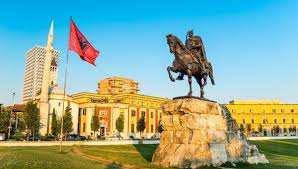
Twenty-one days is the threshold where the region stops feeling like a checklist and starts feeling like a home base. With three weeks, you can cover the full Western Balkans loop — Slovenia, Croatia, Bosnia, Montenegro, Albania, Kosovo, North Macedonia — at a pace that allows for genuine spontaneity. You’ll have days where you do nothing except sit beside Lake Ohrid, or hike to a monastery above Prizren, or get lost in the bazaar district of Skopje without worrying about catching a bus connection.
Three weeks also allows for one or two meaningful detours. A typical extended itinerary might add Romania’s Transylvania region (Brasov, Sibiu), Bulgaria’s Plovdiv and Rila Monastery, or a stretch along the Albanian Riviera that most 10-day travelers never reach. If mountain trekking is part of your plan, our Albania Trekking & Culture 15 Days itinerary shows how even a single-country focus at this length becomes a genuinely transformative experience.
Warning
Three weeks can breed overconfidence in route planning. Many travelers underestimate bus journey times between cities — the Tirana to Pristina route, for example, takes 4–5 hours on a good day. Always build buffer days into a 21-day itinerary rather than scheduling every single night in a new location. Exhaustion catches up fast in week three.
wp:image {“id”:371}
/wp:image
Days Needed by Country: A Quick Reference Breakdown
One of the most useful ways to answer the question of how many days you need in the Balkans is to look at individual countries and their minimum meaningful visit times. These figures assume you’re actually engaging with a place — eating local food, visiting historical sites, doing at least one day activity — rather than rushing through.
| Country | Minimum Days | Recommended Days | Key Highlights |
|---|---|---|---|
| Albania | 4 | 7–10 | Tirana, Berat, Gjirokastër, Riviera, Albanian Alps |
| Bosnia & Herzegovina | 3 | 5–7 | Sarajevo, Mostar, Kravice Waterfalls |
| Montenegro | 3 | 5–7 | Kotor, Durmitor, Cetinje, Budva |
| Kosovo | 2 | 3–4 | Pristina, Prizren, Rugova Canyon |
| North Macedonia | 3 | 4–5 | Ohrid, Skopje, Mavrovo National Park |
| Serbia | 3 | 5–7 | Belgrade, Novi Sad, Zlatibor |
| Slovenia | 3 | 5–6 | Ljubljana, Lake Bled, Triglav National Park |
| Bulgaria | 4 | 6–8 | Sofia, Plovdiv, Rila Monastery, Black Sea coast |
wp:image {“id”:941}
/wp:image
How Travel Style Changes Your Timeline
Two people with identical itineraries can have completely different experiences based on how they move through a region. A slow traveler who prioritizes one excellent restaurant meal per day, wanders without a fixed schedule, and spends evenings talking to guesthouse owners will need significantly more days than a fast mover hitting three cities in the same timeframe. Neither approach is wrong, but your style determines your realistic timeline.
Adventure travelers focused on hiking, cycling, or kayaking need more time in individual locations — you can’t do a serious trek in the Prokletije mountains and catch a bus to Sarajevo the next morning. Cultural deep-divers who want to visit every Ottoman-era monument in Bosnia will move more slowly through fewer destinations. City-focused travelers who prioritize nightlife, gallery visits, and food scenes tend to move faster between places but need longer nights to recover.
When thinking about the best time to visit the Balkans month by month, keep your travel style in mind alongside weather data. A hiker planning the Albanian Alps needs a very different timing window than someone doing a coastal summer trip — and those timing choices directly affect how many productive days they’ll actually get.
Pro Tip
Build in at least one “buffer day” for every 5 days of travel in the Balkans. Buses run late, border crossings can take longer than expected, and occasionally you’ll find a town you want to stay an extra night in. Rigid day-by-day itineraries without flexibility tend to collapse somewhere around day 8 — and then the trip feels stressful rather than adventurous.
Is the Balkans Right for a Short Break?
Five days or fewer is a genuinely viable Balkans trip if your expectations match the format. A long weekend in Belgrade — arriving Thursday, leaving Monday — gives you a legitimate taste of one of Europe’s most energetic capitals. Four or five days in Dubrovnik or Split (Croatia) works perfectly as a coastal escape, though these destinations are technically on the edge of the Balkans geographically and culturally. A 5-day deep dive into just Albania, focusing purely on Tirana and the south, can be incredibly satisfying for someone who knows the region and wants to revisit a specific place.
What a short break cannot do is give you a multi-country Balkans experience. Attempting to see Albania, Kosovo, and North Macedonia in 5 days is a recipe for exhaustion, not discovery. If you only have a few days and this is your first time in the region, a well-chosen single destination will leave you wanting to return — which is arguably the best outcome a short trip can achieve. For context on what the region’s diversity looks like on paper, our guide to Albania as the best country in the Balkans makes the case for why single-country focus can be more rewarding than trying to see everything at once.
How many days do you need in the Balkans for a first-time visit?
For a first visit, plan on a minimum of 10 days and ideally 14. This gives you enough time to visit 3–4 countries without feeling rushed, absorb some local culture at each stop, and handle the inevitable transit time between destinations. The Balkans are geographically compact but logistically complex — bus journeys between major cities regularly take 3–6 hours, and border crossings add additional time. Ten days done well will leave you with a meaningful experience and a strong sense of which countries you’d want to return to for a deeper visit.
Can you do the Balkans in a week?
Yes, but only if you focus on one country or a tight two-country pairing. A week in Albania is excellent — enough time for Tirana, a UNESCO heritage city like Berat or Gjirokastër, and a few days on the coast. Seven days in Montenegro covers the Bay of Kotor, Durmitor, and the coastline comfortably. Trying to visit 3 or more countries in 7 days is possible on paper but results in most of your time being spent on buses and at borders rather than actually experiencing places. A focused 7-day trip is always better than a scattered one.
How long does it take to travel the Western Balkans?
The Western Balkans — Albania, Bosnia and Herzegovina, Kosovo, Montenegro, North Macedonia, Serbia, and sometimes Slovenia and Croatia — takes approximately 3–4 weeks to cover meaningfully. A rushed 14-day circuit is possible but leaves out significant highlights. The most comprehensive loop travelers typically do is 21 days, which allows 2–4 nights in each country’s main destinations without feeling constantly exhausted. If you’re incorporating regional trekking or adventure activities, budget closer to 4 weeks.
What is the most efficient Balkans route for 2 weeks?
An efficient 14-day Western Balkans route in 2026 typically flows like this: fly into Tirana (Albania), spend 3 days in Albania, cross to Kosovo for 2 nights in Prizren and Pristina, move into North Macedonia for 3 nights in Ohrid and Skopje, then travel to Bosnia for 3 nights split between Mostar and Sarajevo, and finish with 2 nights in Montenegro’s Bay of Kotor before flying out. This loop covers 5 countries, keeps transit times manageable, and gives each destination enough time to make a genuine impression. Flying in and out of different airports (Tirana in, Sarajevo or Podgorica out) removes the need to double back.
Is 3 days enough for each Balkans country?
Three days is a workable minimum for smaller, more compact countries like Kosovo or Montenegro’s coastal strip — but it’s tight. For Albania, Bosnia, Bulgaria, or Serbia, 3 days barely scratches the surface. A useful rule of thumb: 3 days is enough to understand why a country is worth returning to, but not enough to actually experience it fully. If your itinerary forces 3-day stops across multiple countries, try to spend at least one of those days doing something genuinely local rather than ticking off standard tourist sites — a cooking class, a market visit, or an off-route village — so each country feels distinct in your memory.
How many countries can you realistically visit in 10 days in the Balkans?
Realistically, 3–4 countries is the sweet spot for a 10-day Balkans trip. Five countries in 10 days is possible but starts to feel rushed. The math works like this: if you allocate 2 nights per country, that’s 10 nights but only 5 countries — and two-night stops rarely feel satisfying. Most experienced Balkans travelers suggest a minimum of 2–3 nights per stop to justify the transit effort. For 10 days, a 4-country itinerary with slightly uneven distribution (spending more time in your highest-priority destinations) will feel far more rewarding than a perfectly balanced 5-country sprint.
What time of year affects how many days you need in the Balkans?
Season affects your timeline in practical ways. In summer (July–August), coastal destinations like the Albanian Riviera and Montenegro’s coast are crowded and accommodation books up fast — you may need to stay put longer just to secure decent lodging rather than moving freely. In winter, some mountain routes and national parks become inaccessible, forcing itinerary changes. Spring and autumn offer the most flexible travel conditions: good weather, lower crowds, and more reliable transport connections. If you’re planning a 10–14 day trip, late May through June or September through mid-October will stretch your days further because logistics run more smoothly.
Ready to Plan Your Balkans Trip?
Whether you have 7 days or a full month, our team at Inside Balkan can help you build an itinerary that matches your time, pace, and priorities. We specialize in authentic, well-paced Balkans travel — not rushed country-ticking. Explore our ready-made tours or reach out for a custom itinerary built around your exact trip length.

Garyalb86
Travel writer and Balkan enthusiast sharing stories and tips from Albania and beyond.
View All Posts