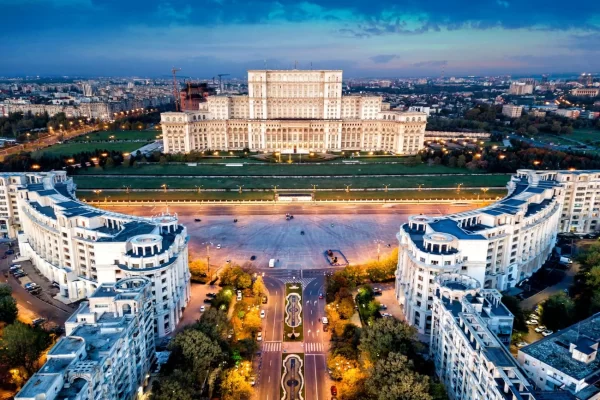
FROM ROMANIA TO ALBANIA – 4 COUNTRIES IN 12 DAYS
BALKAN TOUR MULTI-COUNTRY From Romania to Albania – 4 Countries in 12 Days 📅 12 Days / 11 Nights 👥…
To understand the Balkans fully, you need to understand the Albanian world — and the Albanian world is not contained within Albania’s borders. Kosovo, the world’s newest country (declared independence in 2008), is over 90% ethnically Albanian. Its language, food, music, and traditions are those of the Albanian people, shaped by centuries of Ottoman rule and a more recent history of enormous complexity. This 9-day tour with Inside Balkan travels across both countries, making the cultural connection visible and tangible.
Beginning in Pristina — Kosovo’s kinetic, under-the-radar capital — the tour moves through the extraordinary old city of Prizren, the mountain gorge of Rugova, and the isolated border highlands before crossing into Albania and following the country from north to south: Shkodër, Tirana, and Krujë. Each city has its own character but all are connected by the same language, the same epic cycle of national poetry, and the same fierce pride in Albanian identity.
Inside Balkan is uniquely placed to offer this tour. As an Albanian-owned and operated company with deep roots in both countries, our guides can offer access and context that no outsider could match: the family guesthouses where genuine Albanian hospitality is practised, the cultural and historical narratives that explain why this small nation produced such a disproportionate impact on Balkan history, and the connections between people and places that transform a sightseeing trip into something genuinely meaningful.
This is an intellectual and emotional tour as much as a logistical one. Guests leave with a real understanding of why Kosovo and Albania are, in the words of the tour title, two nations with one soul.
April through October is ideal for this tour. The highland sections around Rugova Gorge and the northern Albanian border are most pleasant in the warmer months. Prizren and Tirana are rewarding year-round. The Dokufest international documentary film festival in Prizren (late July/early August) is a wonderful coincidence if your dates align — the town is electric with it.
This tour is perfect for culturally curious travellers who want more than beautiful scenery — those who want to understand what they are looking at and why it matters. It suits historians, writers, academics, diaspora travellers reconnecting with heritage, and anyone with a genuine interest in the post-Yugoslav Balkans and the question of national identity. It is not a hiking tour, though there are daily walks of 2–3 hours.
9 days · Starts in Pristina · Ends in Tirana
📍 Pristina, Kosovo
Pristina is like no other capital in the world. It has the energy of a city being built in real time: new architecture, street art, café culture, and a very young population (Kosovo has the youngest median age in Europe). Your Inside Balkan guide meets the group for an evening walking tour that captures this energy: the famous Newborn monument (repainted every year since independence in 2008 to reflect the country’s mood), the extraordinary National Library with its bizarre metal mesh facade, the Ottoman-era Çarshia e Madhe bazaar, and dinner in one of Pristina’s excellent restaurants. The local beer is Peja, brewed in the city of the same name — it is excellent.
Overnight: City-centre hotel in Pristina
📍 Pristina
Kosovo’s history is one of the most contested and complex in Europe, and Inside Balkan approaches it with care and balance. The day begins at the 14th-century Gračanica Monastery — a Serbian Orthodox church of extraordinary architectural beauty, still active and protected by NATO troops — which provides crucial context for understanding Kosovo’s ethnic and religious complexity. From there, the group visits Gazimestan, the site of the 1389 Battle of Kosovo — one of the defining moments of Balkan history, commemorated by both Serbs and Albanians in very different ways. Your guide’s nuanced explanation of why the same battle is interpreted so differently by the two communities is one of the most memorable conversations of the tour.
Overnight: City-centre hotel in Pristina
📍 Prizren
Prizren is, by almost universal consensus, the most beautiful city in Kosovo and one of the most beautiful in the entire Balkans. The old town crowds around the Bistrica river below a hilltop fortress: Ottoman mosques, a restored Serbian Orthodox church, a Baroque Catholic cathedral, Albanian League houses, and a bazaar of craftsmen who still make traditional objects in traditional ways. The guide’s walking tour covers all of this with the historical and cultural depth that explains how so many faiths and traditions came to coexist in one small city. The view from the Prizren Fortress at sunset is one of the iconic images of the Balkans.
Overnight: Hotel in Prizren
📍 Peja/Peć
The drive from Prizren to Peja traverses the heart of Kosovo. Peja is primarily visited for the Serbian Patriarchate Monastery — a complex of four churches dating to the 13th century, frescoed with extraordinary Byzantine art, and considered one of the holiest sites of the Serbian Orthodox Church. It sits in a narrow gorge at the entrance to the mountains and the combination of architecture, art, and setting is deeply impressive regardless of religious affiliation. The afternoon is spent walking in the Rugova Gorge — a dramatic mountain canyon that stretches westward from the city toward the Albanian border.
Overnight: Hotel in Peja
📍 Peja → Shkodër, Albania
The mountain crossing from Kosovo into Albania is one of the most dramatic border transitions in the Balkans. The route takes the group through the Junik highlands and across the border into Albania’s remote Tropojë district, stopping at Vermosh — a village so isolated that it is completely cut off from the rest of Albania by snow for three to four months every winter. The community here has maintained traditions that have disappeared elsewhere in Albania, and a visit with a local family provides an unforgettable glimpse of what Albanian highland life has looked like for centuries. The descent to Shkodër on Lake Shkodër brings the group back to the modern world.
Overnight: Hotel in Shkodër
📍 Shkodër → Tirana
Shkodër is Albania’s cultural northern capital and one of its oldest cities — founded in the 4th century BC, it has been Illyrian, Roman, Byzantine, Venetian, and Ottoman. The morning visit to Rozafa Castle — perched on a rocky hill above the confluence of three rivers and a lake, with extraordinary views — covers all of this history in one site. The legend of Rozafa, a woman walled alive into the castle foundations so that it would stand, is one of the most beautiful and disturbing stories in Albanian oral tradition; your guide will tell it properly.
The afternoon transfer to Tirana is followed by a free evening in Blloku.
Overnight: Hotel in Tirana
📍 Tirana
A full day in Tirana, built around the question of what communist Albania was and how it became the country that exists today. Bunk’Art 1 — located inside one of the giant nuclear bunkers that Enver Hoxha built to protect the Party leadership — is the finest museum of communist-era Albania in the world. The guided tour through its rooms of documentary photographs, propaganda posters, and personal testimonies is deeply affecting. The afternoon covers the contrasting modernity of Tirana: the street art of the New Bazaar, the Pyramid of Tirana (a building that was Hoxha’s mausoleum and is now a creative youth space), and the rooftop dinner scene of Blloku.
Overnight: Hotel in Tirana
📍 Krujë
Krujë is the spiritual heartland of Albanian national identity. It was here, in the 15th century, that Gjergj Kastrioti — known as Skanderbeg — united the Albanian princes and led a resistance against the Ottoman Empire that lasted 25 years and secured Albanian survival as a distinct cultural and ethnic group. The Skanderbeg Museum inside the castle, designed by the architect Pranvera Hoxha in a form inspired by ancient Illyrian fortifications, tells this story with enormous pride. Below the castle, the Ottoman bazaar is one of the best-preserved in Albania — still selling handmade carpets, silverware, and traditional clothing. Return to Tirana for farewell dinner.
Overnight: Hotel in Tirana
📍 Tirana
Farewell breakfast. Transfer to Tirana International Airport. Inside Balkan’s guide will assist with any onward travel arrangements.
Tour ends in Tirana
Border crossings between Kosovo and Albania are straightforward and well-managed by Inside Balkan’s guides. Most Western nationalities do not require visas for either country. Kosovo uses the Euro as its currency. Albania uses the Albanian Lek, though Euros are widely accepted. Both countries are safe, welcoming, and significantly more affordable than Western Europe.
Everything you need to know about the Kosovo & Albania – Two Nations, One Soul
Fill out the form and Inside Balkan will respond within 24 hours
🔒 Your information is private and will never be shared with third parties
BALKAN TOUR MULTI-COUNTRY From Romania to Albania – 4 Countries in 12 Days 📅 12 Days / 11 Nights 👥…
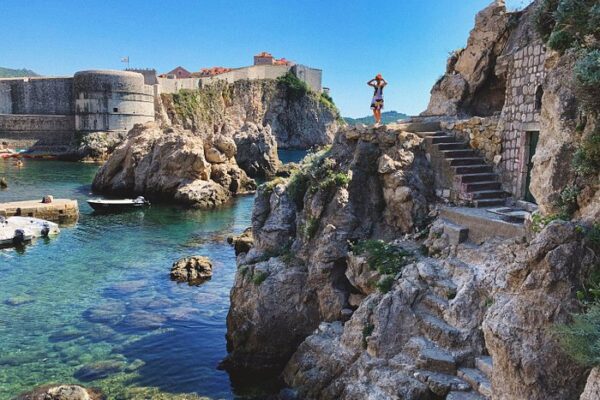
BALKAN TOUR MULTI-COUNTRY Best of Balkans 📅 10 Days / 9 Nights 👥 Max 16 🎂 Ages 18-75 📍 Tirana…

Home › Tours › Albania Tours › Albanian Riviera Beach & Culture Week ALBANIA TOUR BEACH · RELAXATION Albanian Riviera…